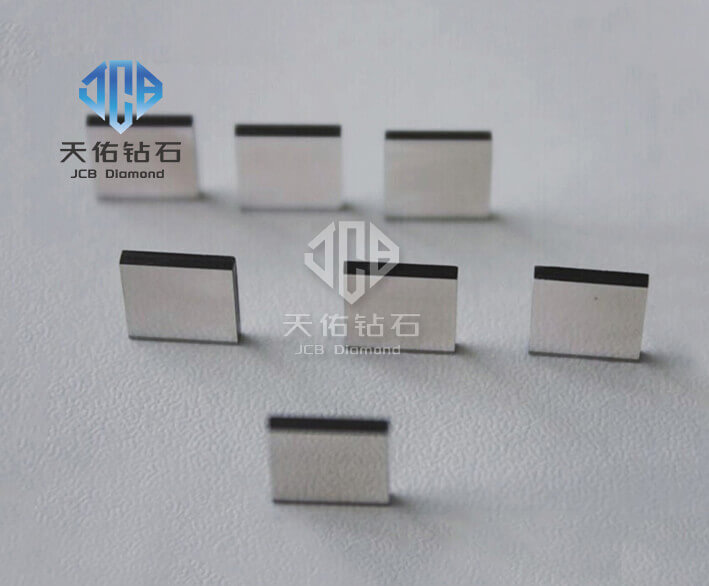
Since heat sink materials must be tightly mounted against the chip, two fundamental performance requirements must be considered: high thermal conductivity (TC) and a matching coefficient of thermal expansion (CTE).
Diamond transfers heat through lattice vibrations. Carbon atoms possess a high quantum energy for vibration, meaning their vibration frequency is very high, resulting in exceptionally high thermal conductivity. The thermal conductivity of natural single-crystal diamond at room temperature (25°C) can reach 2200 W/(m·K). By comparison, the thermal conductivity of copper is approximately 400 W/(m·K), while that of silicon, a traditional semiconductor material, is less than 200 W/(m·K). Diamonds grown artificially using the CVD method typically also achieve a thermal conductivity of 1,000–2,000 W/(m·K) at room temperature.
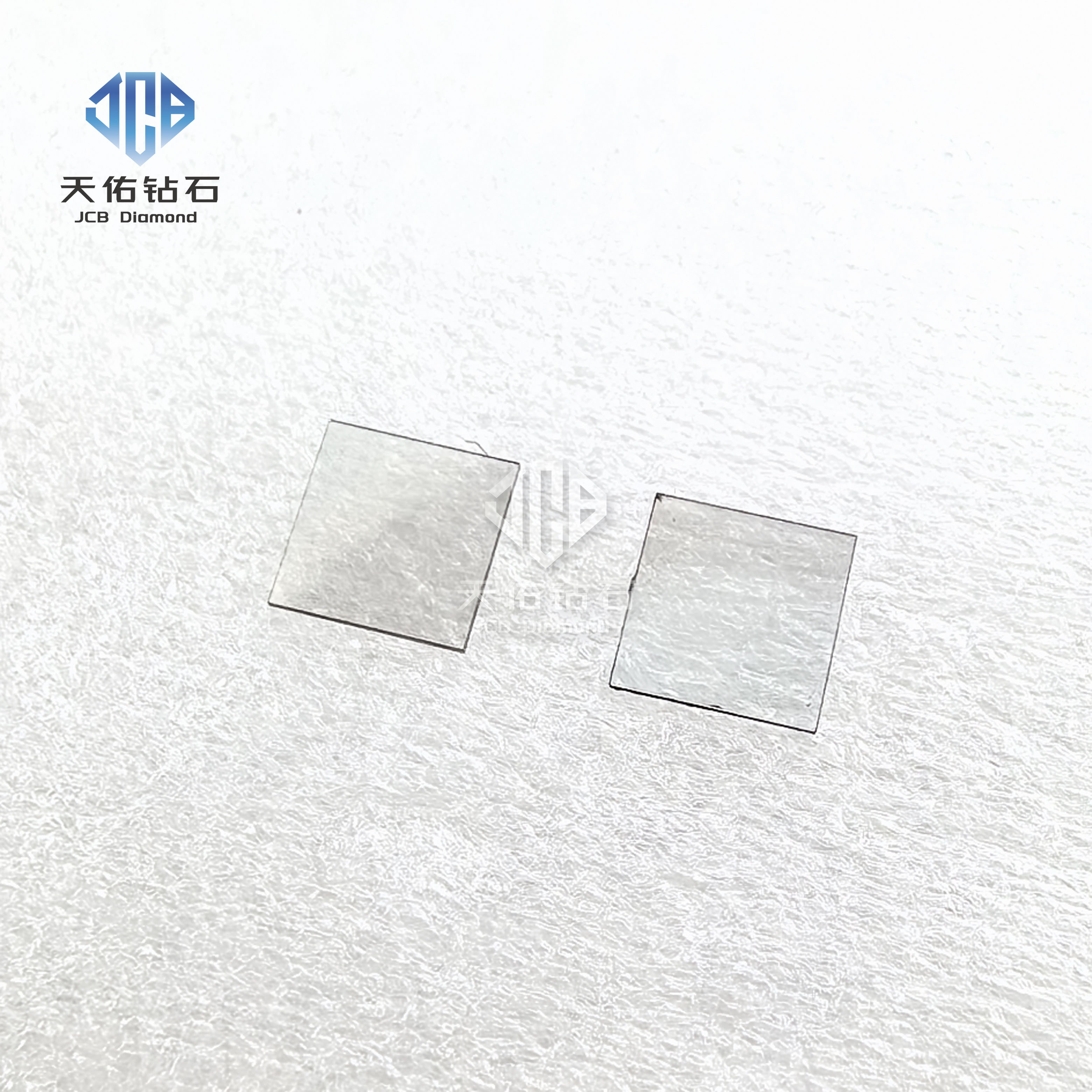
By comparison, ceramic materials such as aluminum nitride, beryllium oxide, and aluminum oxide have thermal conductivities of 170–230 W/m·K, 190 W/m·K, and 20 W/m·K, respectively. Among these, impurities and defects generated during the sintering process of aluminum nitride cause the actual thermal conductivity of the final product to fall below the theoretical value; beryllium oxide is costly to produce and highly toxic; and aluminum oxide has the lowest thermal conductivity. Metal materials: such as aluminum and copper. Their thermal conductivities are 230 W/m·K and 400 W/m·K, respectively; however, aluminum and copper have high coefficients of thermal expansion, which may lead to significant thermal mismatch issues. Composite materials: such as aluminum silicon carbide (AlSiC). This is a metal-matrix composite that combines SiC ceramics with metallic aluminum, with a thermal conductivity of 200 W/m·K. It requires adjusting the SiC content to match the thermal expansion coefficient of adjacent materials, which increases debugging costs.
Diamond heat sink materials offer the advantages of high thermal conductivity and low thermal expansion. They have low density and good plating and machinability, making them suitable replacements for currently widely used materials such as tungsten-copper, AlSiC, and AlN. Composites of diamond with metals such as copper and aluminum are the new favorites among advanced heat sink materials both domestically and internationally. By adjusting the volume fraction of diamond, high thermal conductivity and adjustable thermal expansion can be achieved, meeting the requirements of system heat dissipation and assembly processes. These materials are hailed as the fourth-generation heat sink materials for electronic packaging. Diamond possesses the highest thermal conductivity at room temperature—five times that of copper and silver—and is also an excellent insulator, making it an ideal heat dissipation material for high-power laser devices, microwave devices, and highly integrated electronic devices. For applications requiring thermal conductivity between 1000 and 2000 W/m·K, diamond is the preferred and often the only viable heat sink material.
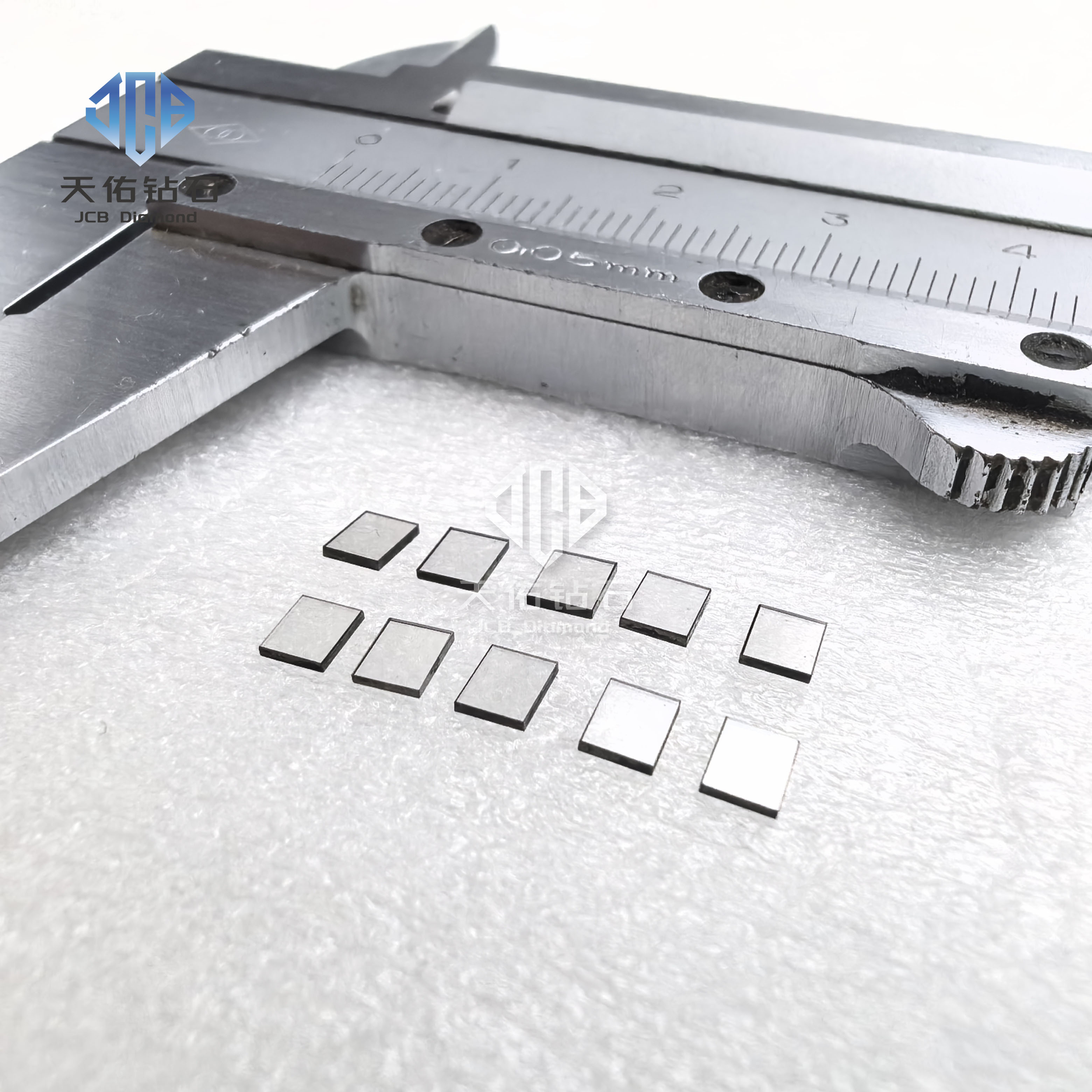
Currently, CVD diamond heat sink plates can be widely integrated into thermal management solutions in the following three ways:
1. Individual diamond units are bonded through metallization and welding (e.g., using Ti/Pt/Au sputter-deposited metals and AuSn eutectic soldering);
2. Pre-fabricated wafers supporting multiple devices, enabling device manufacturers to process wafers in high volumes (e.g., metallization and mounting). After these additional steps are completed, these wafers can serve as substrates for individual sub-assemblies.
3. Direct application of diamond coatings.