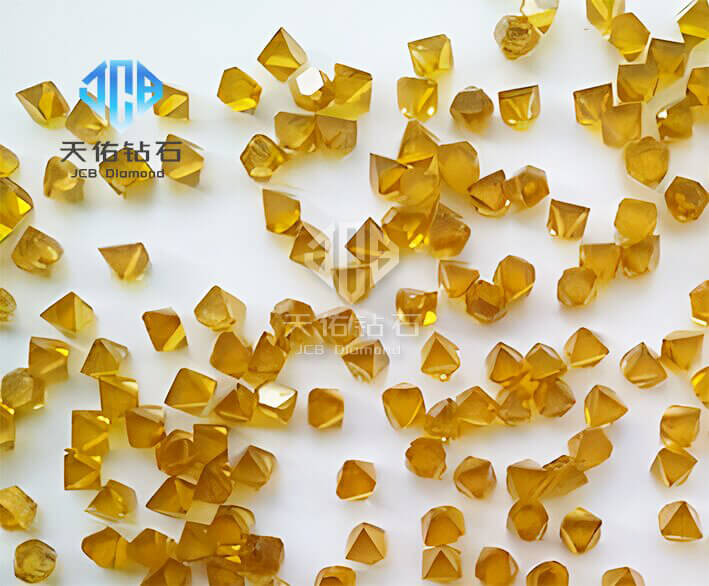
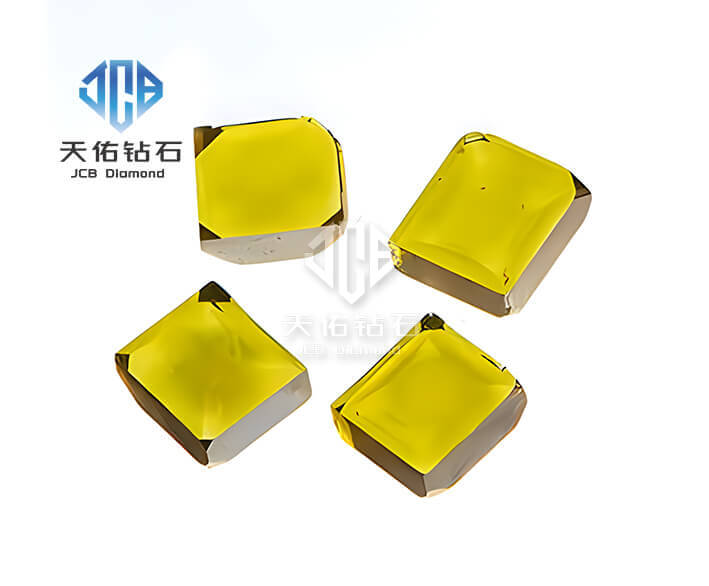
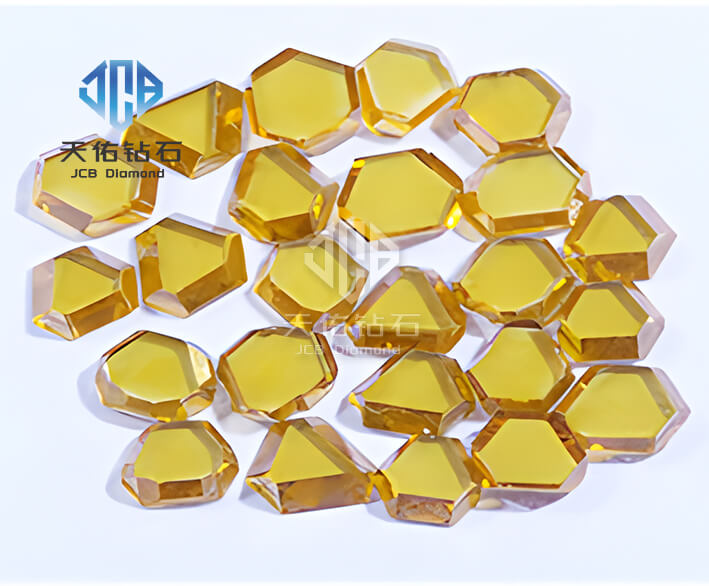
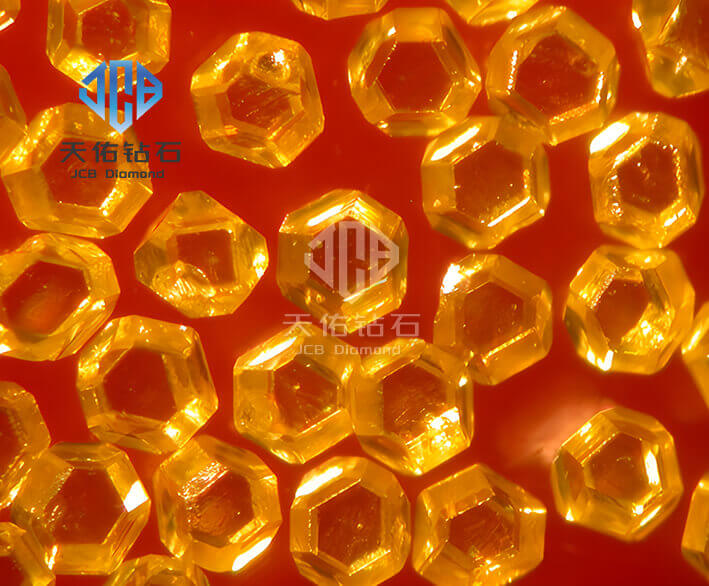
As the power consumption of NVIDIA’s next-generation GPUs surpasses 1,000W and the proportion of energy spent on cooling in data centers surges to 40%, traditional copper and aluminum cooling solutions have reached their physical limits. Thermal management is no longer a secondary consideration in the industry; it has become the critical lifeline constraining breakthroughs in computing power, device miniaturization, and energy efficiency. Leveraging the properties of ultra-wide bandgap semiconductors, diamond has emerged as an irreplaceable “all-rounder” in thermal management. Between 2025 and 2026, with multiple key technological breakthroughs and commercial implementations, diamond-based thermal management will officially move beyond the laboratory stage and enter its first year of mass production.
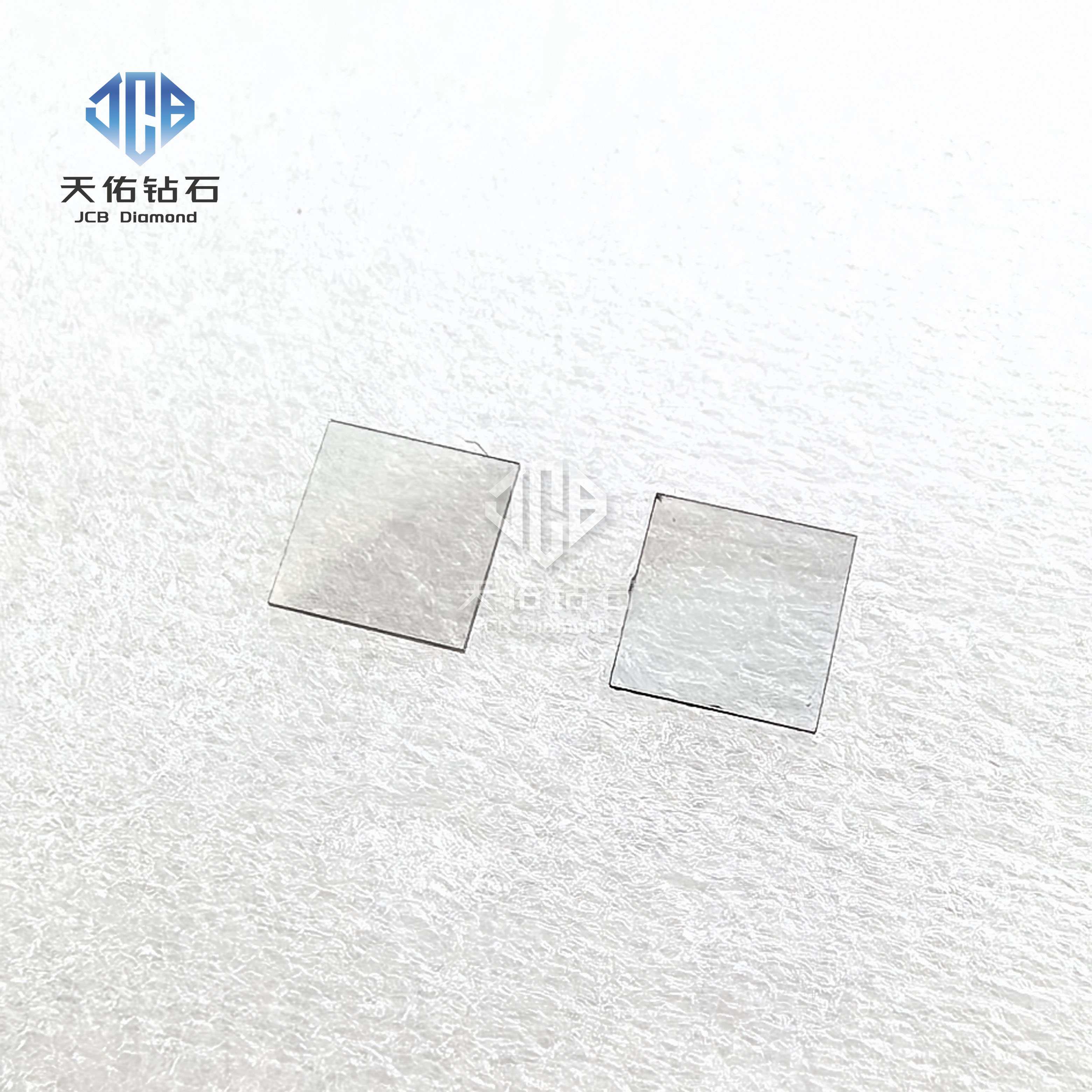
I. Four Core Advantages: Setting the Benchmark for Thermal Performance
Diamond’s rapid rise as a core material in the high-end thermal management sector stems fundamentally from its comprehensive superiority over traditional materials, perfectly aligning with industry trends toward high power, miniaturization, and high integration:
1. Unparalleled Thermal Conductivity: Diamond is the material with the highest known thermal conductivity in nature. The thermal conductivity of single-crystal diamond can reach up to 2,400 W/m·K—5.5 times that of pure copper and 9.6 times that of pure aluminum—making it highly efficient for meeting the thermal management demands of kilowatt-class power devices.
2. Compatibility with Semiconductor Packaging: Its coefficient of thermal expansion is highly compatible with substrate materials such as silicon and gallium nitride, effectively reducing thermal stress in packaging from the source. This prevents chip damage and package delamination, significantly enhancing device reliability.
3. Extreme Lightweight Design: With a thermal conductivity-to-density ratio of up to 625—13.9 times that of pure copper—it enables thinner and lighter designs while maintaining equivalent thermal performance, making it ideal for high-density chip packaging and aerospace applications.
4. Cost Reduction Through Composite Modification: It can be combined with metals such as copper and aluminum to form new composite materials that retain high thermal conductivity while inheriting the formability advantages of metals. At a cost of only one-third that of pure diamond heat sinks, this significantly lowers the barrier to large-scale adoption.
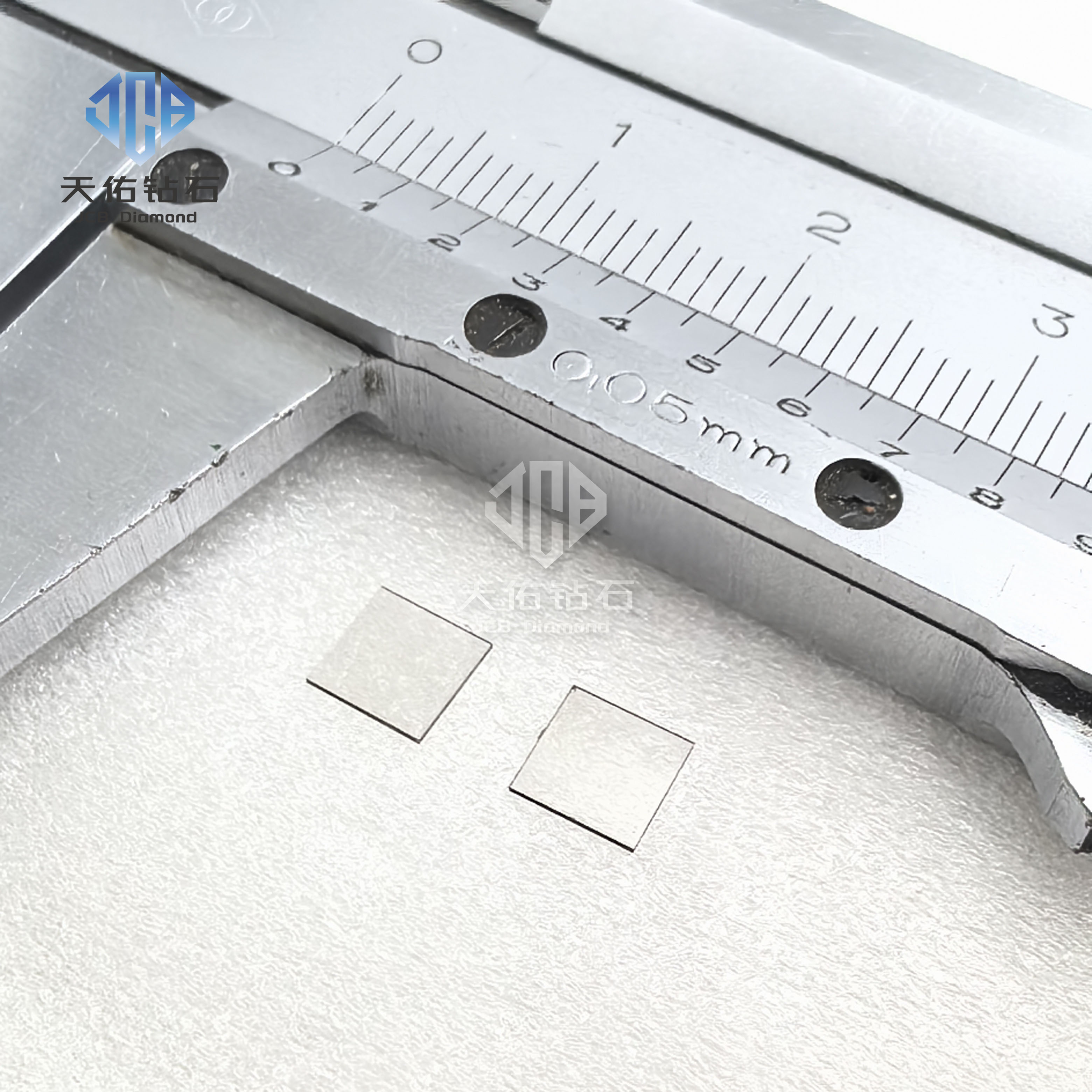
II. Three Major Technical Pathways Covering All Commercial Scenarios
Combining technological breakthroughs with commercialization practices, diamond-based thermal management has established three core application pathways, each with its own advantages, to cover all scenario requirements:
1. Diamond Substrates: The semiconductor functional layer is epitaxially grown directly on a diamond substrate, offering the lowest thermal resistance and highest thermal efficiency. This is primarily used in extreme thermal management scenarios such as high-end RF devices and quantum computing chips.
2. Diamond Heat Sink: An independent cooling component for the back-end-of-line (BEOL) packaging process. It requires no modification to existing chip designs or production lines, offers strong compatibility, and enables rapid implementation. It has already undergone mass-production validation in applications such as AI server GPUs, 5G base station RF components, and optical modules, making it the path with the fastest commercialization progress to date.
3. Diamond Microchannel Cooling: Deeply integrated with liquid cooling technology, it can operate stably under extreme heat flux densities of 1000 W/cm², making it the core solution for future ultra-high heat flux scenarios.
III. Penetrating All Sectors, Expanding Market Opportunities Across Multiple Tracks
Leveraging its performance and technological advantages, diamond cooling has achieved comprehensive penetration across multiple sectors, with core applications spanning six major areas: AI semiconductor chips, high-speed optical communication modules, new energy vehicles, 5G/6G communications, aerospace, and quantum computing and high-end medical equipment. As costs continue to decline, market penetration is accelerating. The high-power cooling demands across these sectors are collectively driving diamond cooling from a “high-end niche” solution to an “industry-critical necessity.”