A university research team has developed a scalable diamond heat dissipation layer technology capable of lowering electronic device operating temperatures by 23 degrees Celsius, offering a new engineering pathway for high-power chip cooling.
Diamond, prized for its exceptional thermal conductivity, is considered the “gold standard” among heat dissipation materials. However, its extreme hardness and processing challenges have limited practical applications.
To address this, the team proposed a “bottom-up” diamond growth method. By directly constructing patterned diamond layers on the chip surface, precise heat extraction is achieved. Compared to traditional “top-down” processing—where a solid diamond block is first fabricated and then cut and engraved—the new method avoids material damage and high costs.
This technology employs microwave plasma chemical vapor deposition (CVD). Researchers first create a “template” on the chip surface using photolithography, then deposit nanoscale diamond “seeds” onto the template.

Within a high-energy reactor, carbon-rich gas is converted into plasma by microwave energy. Carbon atoms then deposit and adhere to the nuclei, growing layer by layer into a thermally conductive diamond layer. Researchers emphasize that nucleation is the critical step in diamond growth, providing the foundation for carbon atoms to form a crystalline structure.
In electronics, heat is a core factor limiting performance. A 23°C temperature reduction holds practical significance, not only extending device lifespan but also enabling higher operating speeds without overheating.
According to the report, photolithography is employed for high-resolution complex patterning applications, whilelaser-cutting thin films is used for large-area scenarios, achieving process adaptability across different contexts. This flexibility is considered to provide a viable path for industrialization.
Furthermore, the process is compatible with multiple semiconductor substrate materials, including silicon and gallium nitride, laying the groundwork for integrating high-performance diamond thermal layers across diverse technological pathways.
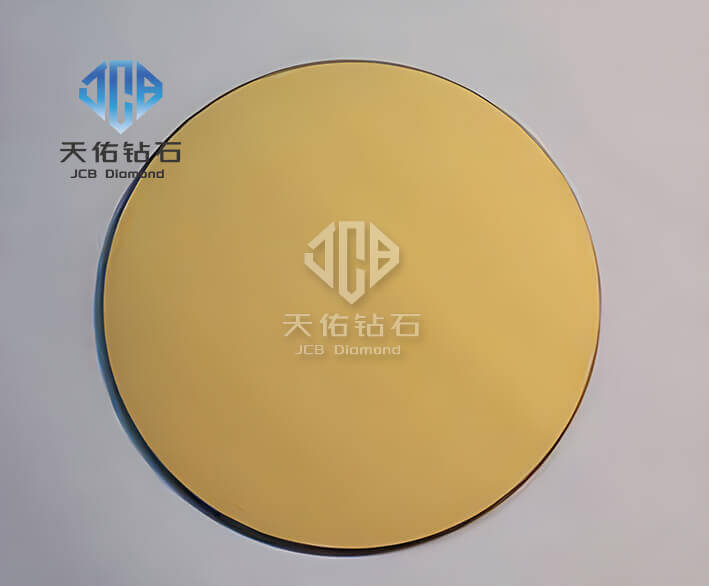
The research team reports that the new method has been successfully scaled up to 2-inch wafer manufacturing, with potential applications in high-power semiconductor devices such as AI chips and 5G hardware.

The team has identified a scalable and effective approach to integrating diamond thermal management technology into electronic devices. This holds potential implications for enhancing the efficiency and reliability of smartphones, batteries, and computing equipment.
The research team's next phase aims to optimize the interface bonding between the diamond layer and underlying electronic components to achieve tighter structural integration. A breakthrough in this area could facilitate the development of next-generation transistor devices capable of higher speeds and greater power handling.