Passive cooling primarily employs thermal conduction or thermal radiation principles, relying mainly on heat sinks or heat spreaders for temperature reduction. Thin and lightweight consumer electronics such as mobile phones and tablets typically utilize this approach due to constraints imposed by internal space structures. Heat spreaders for passive cooling include graphite heat spreader films, graphene films, heat pipes, and heat spreader plates.
(1) Graphite Heat Dissipation Film
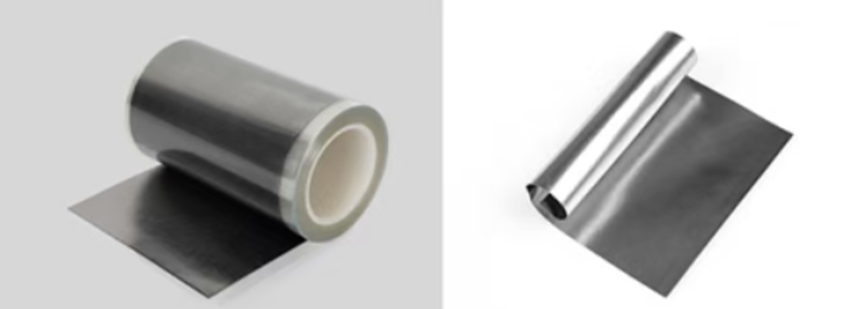
Graphite heat dissipation film is the most widely used material in consumer electronics cooling. Graphite's unique hexagonal planar lattice structure enables uniform heat distribution across a two-dimensional plane and efficient thermal transfer. Its low density allows for lightweight construction, and it adheres smoothly to any flat or curved surface, enhancing heat dissipation efficiency.
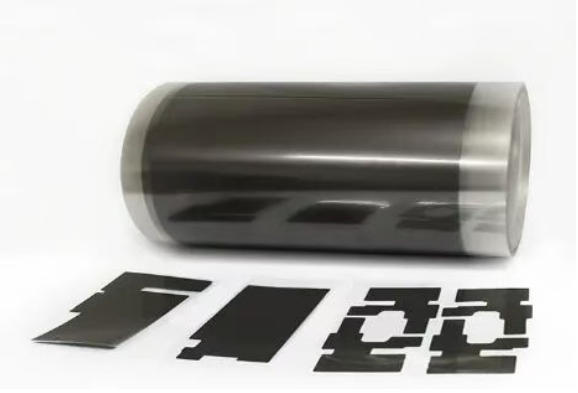
Based on manufacturing methods, thermal conductivity, dimensions, and thickness, graphite thermal materials can be categorized into natural thermal graphite sheets, synthetic thermal graphite films, and nano-composite graphite films. Among these, natural thermal graphite sheets exhibit thermal conductivities ranging from 800 to 1200 W/m·K, with a minimum thickness of 0.1 mm. Synthetic graphite films are highly crystalline carbon molecular graphite films. Their crystalline surfaces achieve thermal conductivities of 1500–2000 W/m·K with thicknesses as low as 0.03 mm. These films serve as ideal heat-spreading materials for eliminating local hotspots, acting as thermal bridges between heat sources and heat sinks.
(2) Graphene
As a rising star in the new materials industry, graphene holds the highest known thermal conductivity among substances, with a theoretical thermal conductivity of 5300 W/m·K—far exceeding graphite. It forms a two-dimensional honeycomb crystal structure from a single layer of carbon atoms through electron orbital hybridization, measuring just 0.335 nm thick. Also known as monolayer graphite, it is an allotropic form of carbon nanotubes and fullerenes. Its drawbacks include low production capacity and high cost.