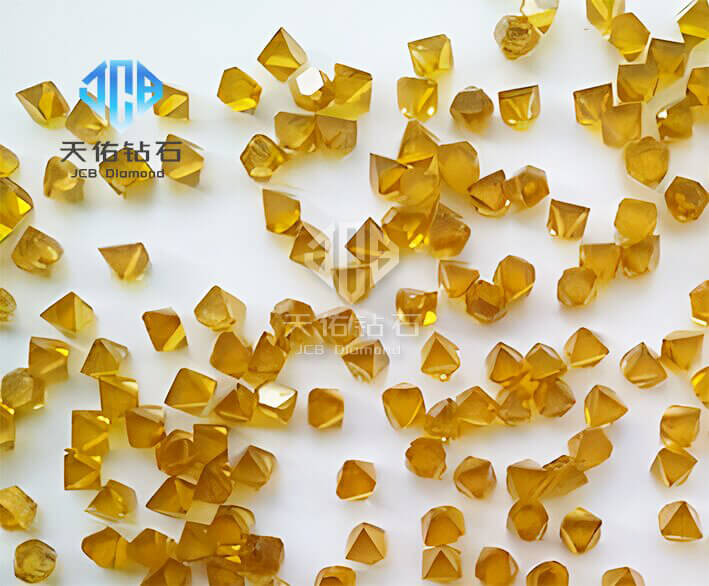
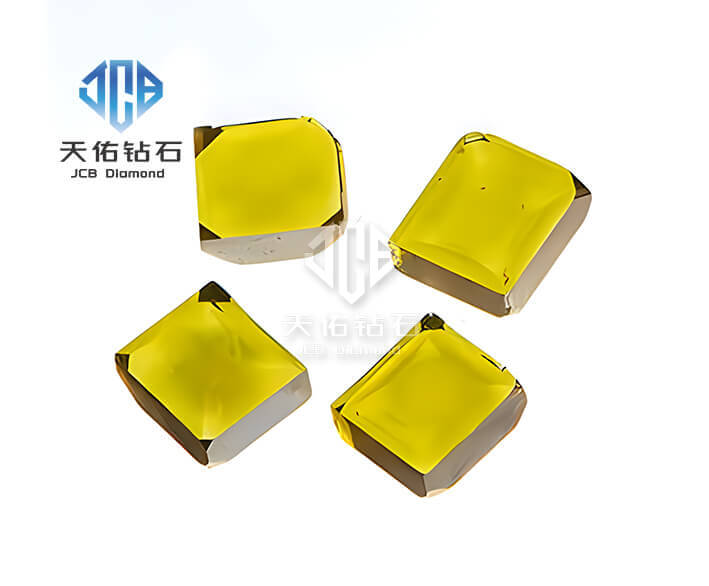
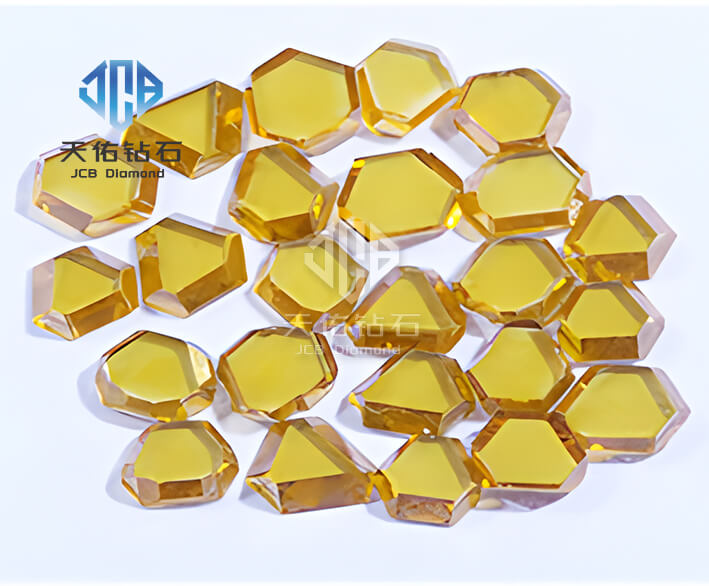
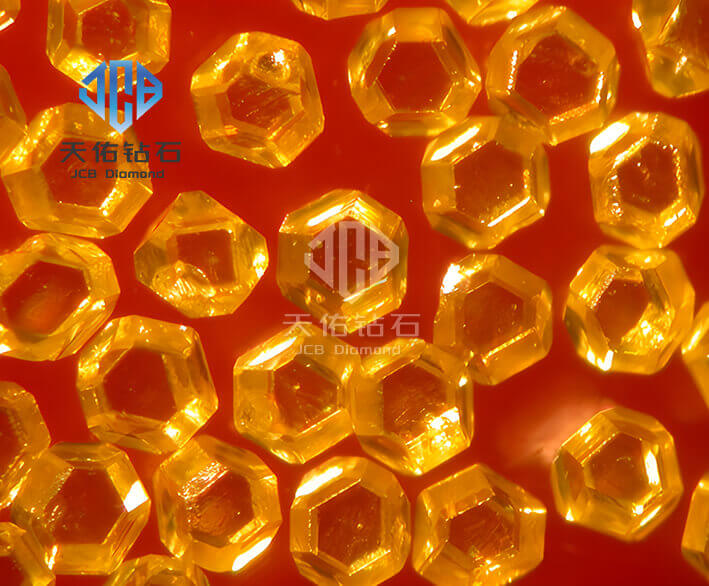
With the rapid advancement of technology, diamond has been hailed as a “supermaterial” due to its exceptional acoustic, optical, electrical, and thermal properties, demonstrating broad application prospects across numerous fields. As the hardest substance in nature, diamond not only possesses a wide bandgap and a broad range of light transmittance but also exhibits chemical inertness toward most substances, enabling it to function stably under extreme conditions such as high temperatures, high pressures, and high frequencies.
In terms of thermal properties, diamond is truly unique, boasting the highest thermal conductivity found in nature. At room temperature, diamond’s thermal conductivity reaches 2000–2200 W/m·K, which is four times that of silicon carbide (SiC), 13 times that of silicon (Si), 43 times that of gallium arsenide (GaAs), and 4–5 times that of copper and silver. In modern high-power electronic and optoelectronic devices (such as 5G applications, high-speed computing, or high-power semiconductor chips), the massive amount of heat generated within a very small area poses a severe challenge for heat dissipation. To quickly resolve cooling issues, heat sinks or thermal coatings made of highly thermally conductive materials must be placed at the heat-generating end (such as heat sinks, fans, or heat sinks). Diamond, with its extremely high thermal conductivity, extremely low coefficient of thermal expansion, and insulating properties at room temperature, has become an ideal choice in the field of thermal management.
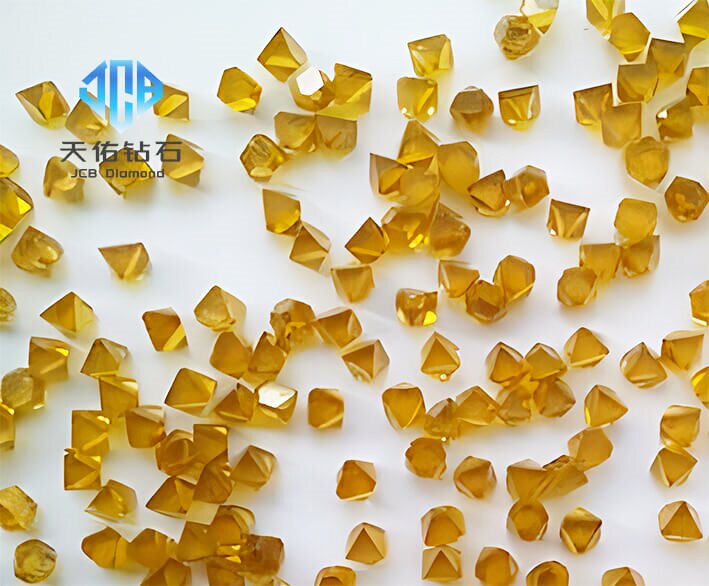
In thermal management applications, diamond primarily takes two forms: diamond films and diamond used as a thermal conductive filler. Currently, thermal conductive diamond fillers are mainly applied in two major areas: metal-matrix diamond composites and thermal interface materials.
Metal-Based Diamond Composites
When used as a reinforcing phase, diamond’s extremely high thermal conductivity (reaching 600–2200 W/m·K at room temperature) enables metal-based diamond composites to exhibit outstanding thermal performance. For example, when the volume fraction of diamond in a diamond/copper composite is 35%, its thermal conductivity can reach as high as 602 W/m·K. This high thermal conductivity makes the material highly suitable for applications requiring efficient heat dissipation, such as electronic packaging and high-power electronic devices. Furthermore, when combined with a metal matrix (such as copper or aluminum), diamond’s low coefficient of thermal expansion (approximately 2.3×10⁻⁶ K⁻¹) effectively reduces the composite material’s coefficient of thermal expansion, minimizing dimensional changes during temperature fluctuations and thereby enhancing the stability and reliability of the equipment.