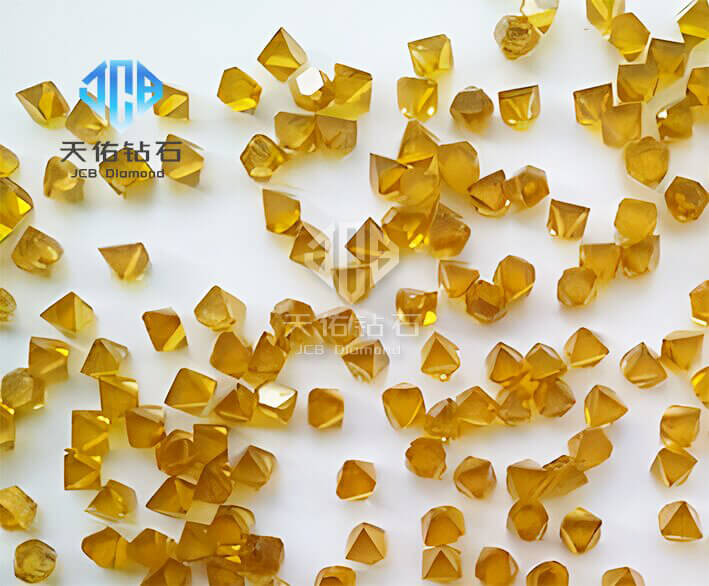
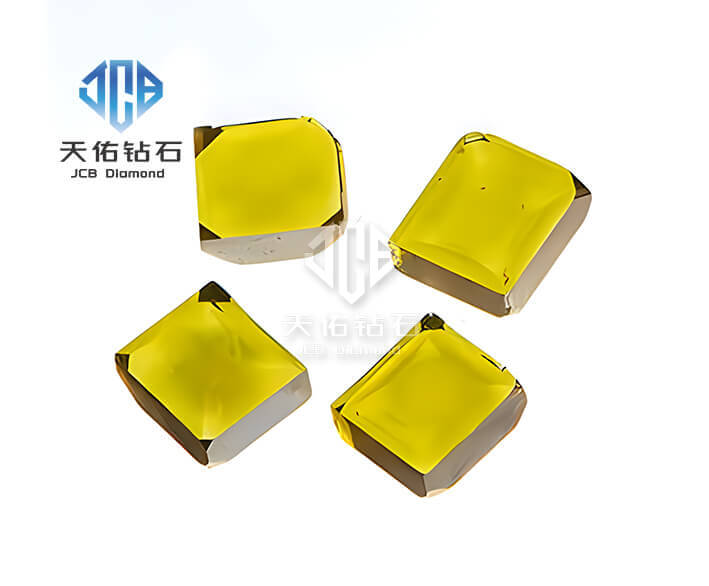
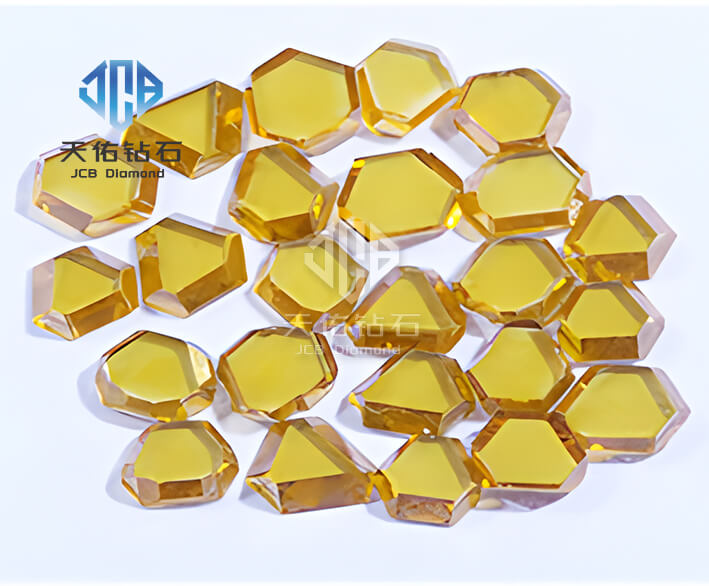
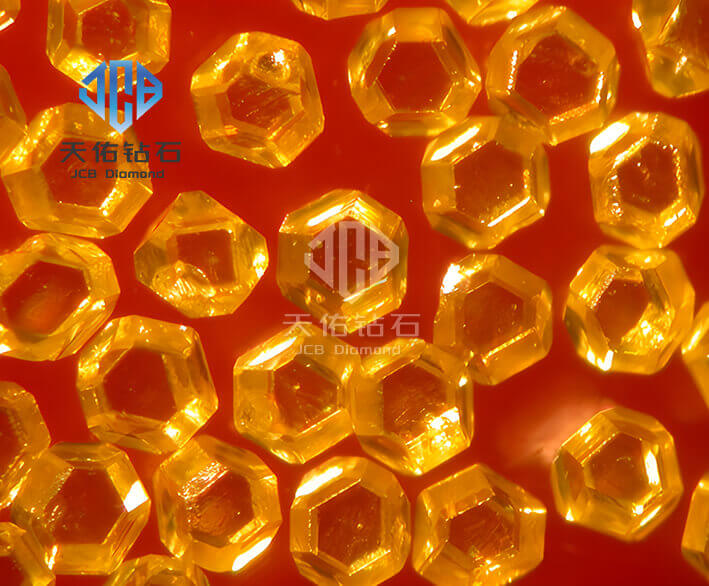
As the power density of high-performance computing and artificial intelligence chips continues to rise, thermal management is increasingly becoming a key factor limiting system performance. New materials with superior thermal conductivity are attracting attention within the industry; amongst these, diamond—due to its extremely high thermal conductivity—is regarded as one of the potential high-end thermal management materials.
For a considerable period, the use of diamond for thermal management remained largely confined to materials research or small-scale applications, with relatively slow progress towards industrialisation. A key reason for this is that pure diamond still presents practical challenges in terms of structural stability, machinability and compatibility with semiconductor devices. Consequently, in recent years the industry has gradually shifted towards a composite materials approach, combining diamond with other engineering materials to enhance the overall manufacturability and structural stability of the material.
In light of these challenges, the development of composite materials has emerged as a significant technological pathway in recent years.
In June 2025, a global materials giant announced a diamond-silicon carbide ceramic composite material. By incorporating diamond into a silicon carbide ceramic system, this material enhances structural stability whilst maintaining high thermal conductivity. According to information disclosed by the company, the thermal conductivity of this composite material can reach approximately 800 W/mK, which is significantly higher than that of traditional copper materials. Furthermore, as silicon carbide itself possesses good mechanical strength and chemical stability, this composite system is able to maintain stable performance even under high-temperature and complex environmental conditions.
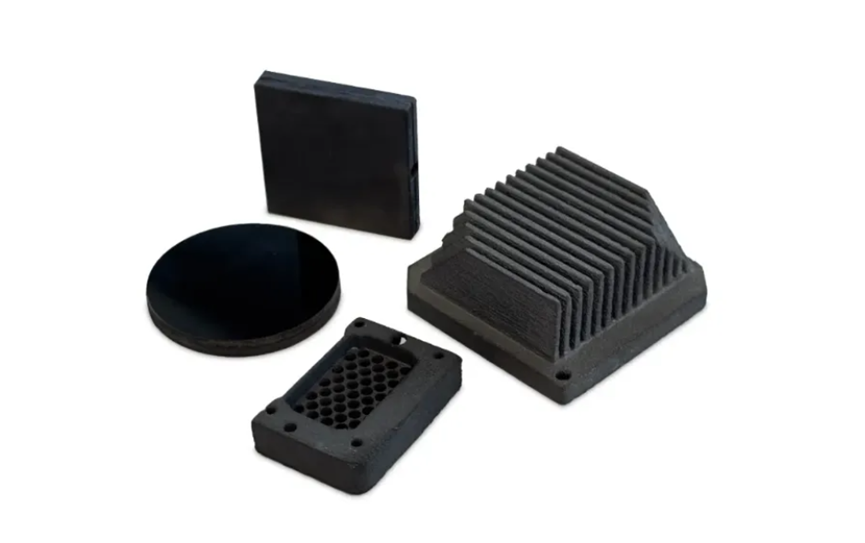
From the perspective of material structure, this design approach does not simply utilise diamond as a heat sink, but rather incorporates diamond into a thermal conduction network via a ceramic composite structure, whilst utilising silicon carbide to provide mechanical support. This not only maintains high thermal conductivity but also improves the feasibility of material processing and structural design to a certain extent.
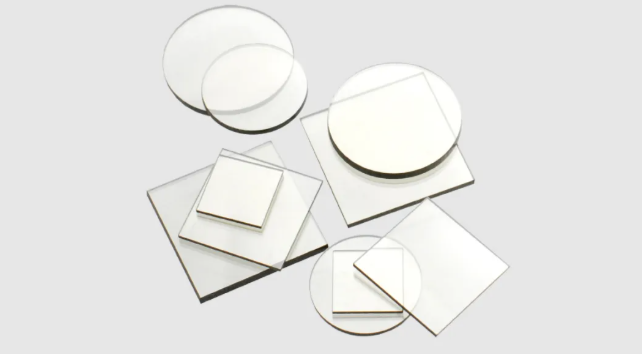
Following the release of the material, the relevant technology began to be gradually applied to specific heat dissipation structures. In January 2026, another diamond thermal management solution capable of being directly bonded to semiconductor chips was announced. A key feature of this solution is the direct bonding of the diamond heat dissipation layer to the chip, thereby reducing the thermal resistance associated with traditional thermal interface materials. According to data released by the company, this structure can reduce interfacial thermal resistance by up to approximately 99 per cent and supports chips measuring up to 100 millimetres square.
The incorporation of microchannel liquid cooling into heat dissipation structures has become an increasingly common technical approach in data centres and high-power electronic equipment in recent years. By machining micron-scale channels within the heat sink to bring the coolant into direct contact with the heat source, heat transfer efficiency can be significantly improved. However, if the material itself lacks sufficient mechanical strength, the complex flow channel structure may present reliability issues during both machining and long-term operation. Therefore, the combined use of diamond and silicon carbide can, to a certain extent, resolve the difficulty of machining complex structures with pure diamond material, whilst maintaining high thermal conductivity.
From an engineering design perspective, the core concept behind this structure is to combine ‘high-thermal-conductivity materials’ with ‘complex fluid structures’, enabling the material not only to perform a heat-diffusion function but also to contribute to the design of the overall heat dissipation system. Compared to traditional copper cold plates, these composite cold plates exhibit distinct differences in both thermal conductivity and structural design; consequently, they are primarily intended for electronic systems with high heat flux densities, such as high-performance computing equipment or power electronic devices.
From a chronological perspective, a relatively clear path of technological evolution can be observed. The diamond-silicon carbide composite materials released in 2025 primarily constituted the foundational technology at the materials level, with the focus on resolving structural stability issues in the engineering application of diamond heat dissipation materials. Subsequently, in early 2026, these materials began to be utilised in chip-level thermal management structures, with direct bonding employed to reduce interfacial thermal resistance. The liquid-cooled plate products launched in March 2026 further extended the application of this material system to system-level thermal management structures, enabling integration with liquid cooling technology.
The industrialisation of diamond heat dissipation materials remains at a relatively early stage, but concrete engineering explorations have already emerged in areas such as composite material structures, interfacial thermal resistance control and liquid cooling system integration. As chip power density continues to increase, striking a balance between material performance, structural design and system thermal management will remain a key challenge for the future development of thermal management technology.