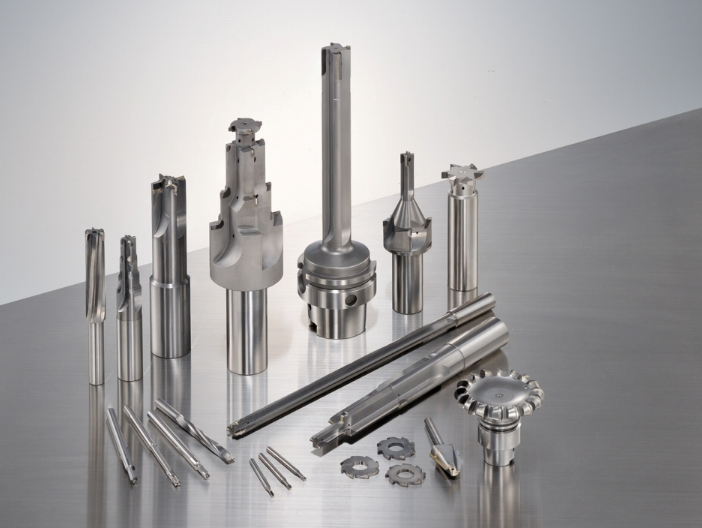
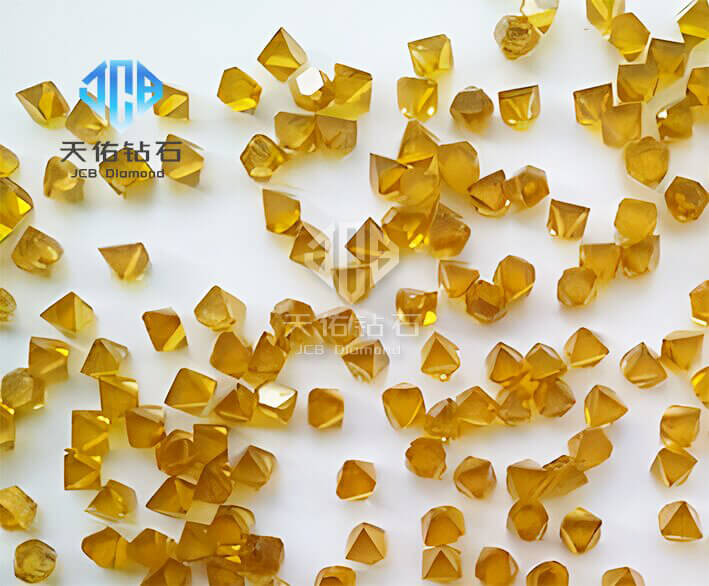
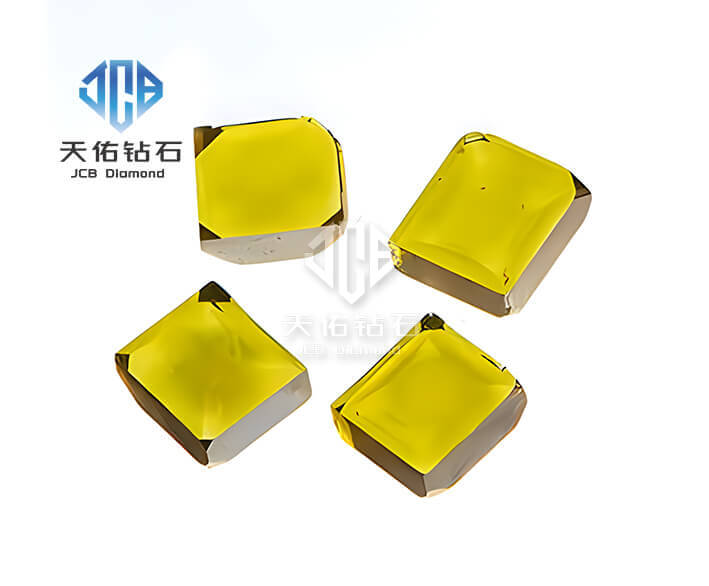
The use of PCD cutting tools is currently on an upward trend year by year. Due to their high hardness, PCD cutting tools are generally used only for machining non-ferrous metals, aluminum, copper, composite materials, and graphite products. However, in the case of finish machining of certain ferrous metals—or machining with small material removal—and when cutting temperatures are well controlled, PCD cutting tools also demonstrate exceptional wear resistance during the finish machining of non-ferrous metals.
1. Price Changes
In the past, high prices were a major obstacle to the widespread adoption of PCD (polycrystalline diamond) cutting tools, but the situation has changed significantly. Industry estimates indicate that over the past two to three years, the price of PCD cutting tools has fallen by 40–60 percent. One reason for this “plunge” in PCD cutting tool prices is an oversupply in the market. In the early 1990s, the growth momentum of PCD tools began to surpass that of traditional cemented carbide tools, and market demand for PCD tools continued to rise over the following decade. However, as PCD tool manufacturing technology matured, the growth in sales began to slow. In addition, new competitors entering the PCD tool manufacturing sector disrupted the existing market pricing structure. Another reason for the decline in PCD tool prices is the continuous reduction in manufacturing costs and ongoing improvements in manufacturing processes. Furthermore, compared to a decade ago, the quality of diamond grinding wheels used to machine PCD tools has significantly improved, while their costs have dropped substantially. Demand for PCD tools in China continues to rise.
2. Tool Characteristics
Machining aluminum workpieces with PCD tools offers advantages such as long tool life and high metal removal rates; the disadvantages are high tool costs and high machining costs. This has become a consensus in the machinery manufacturing industry. However, in recent years, there have been many changes in the development and application of PCD tools. Today’s aluminum materials possess vastly different properties than in the past. When machining various newly developed aluminum alloys, it is essential to carefully select the grade and geometric parameters of PCD cutting tools to meet different machining requirements and optimize productivity and machining quality. Another change regarding PCD cutting tools is the continuous reduction in machining costs; driven by market competition and improvements in manufacturing processes, the price of PCD cutting tools has dropped by more than 50 percent. These trends have led to the increasing use of PCD tools in aluminum machining, although their applicability is limited by the specific properties of the workpiece material.
3. Proper Use
When machining aluminum alloys, the roughing feed rate for carbide tools is approximately 120 m/min, whereas PCD tools can achieve feed rates of up to approximately 360 m/min, even when roughing high-silicon aluminum alloys. Tool manufacturers recommend using fine-grain PCD grades for machining silicon-free and low-silicon aluminum alloys, and coarse-grain PCD grades for machining high-silicon aluminum alloys. If the surface finish of a milled workpiece does not meet requirements, finishing inserts with smaller grain sizes can be used to finish the workpiece surface and achieve a satisfactory surface finish.
The correct application of PCD cutting tools is essential for achieving satisfactory machining results. Although the specific causes of tool failure vary, they are typically due to incorrect application or improper usage. When ordering PCD cutting tools, users should accurately understand the tools’ range of applicability.
Generally, to reduce cutting forces and prevent the formation of built-up edges, PCD cutting tools should be designed with a positive rake angle. However, when machining high-silicon aluminum alloys, the rake angle of the PCD tool should ideally be slightly smaller than that of the original carbide tool to improve the cutting performance of the PCD tool’s cutting edge on high-silicon aluminum alloys. The positive rake angle of the PCD tool should also not be too large, because the larger the rake angle, the lower the strength of the cutting edge. In other words, the smaller the rake angle of the PCD tool, the higher the strength of the cutting edge.
With the rapid advancement of technology, the field of PCD cutting tools is also on an upward trend. Their excellent tool life ensures dimensional consistency of products. At the same time, they reduce the physical strain on workers and eliminate the need for frequent tool changes. Therefore, it is inevitable that the market share of PCD cutting tools in their applicable fields will continue to rise.