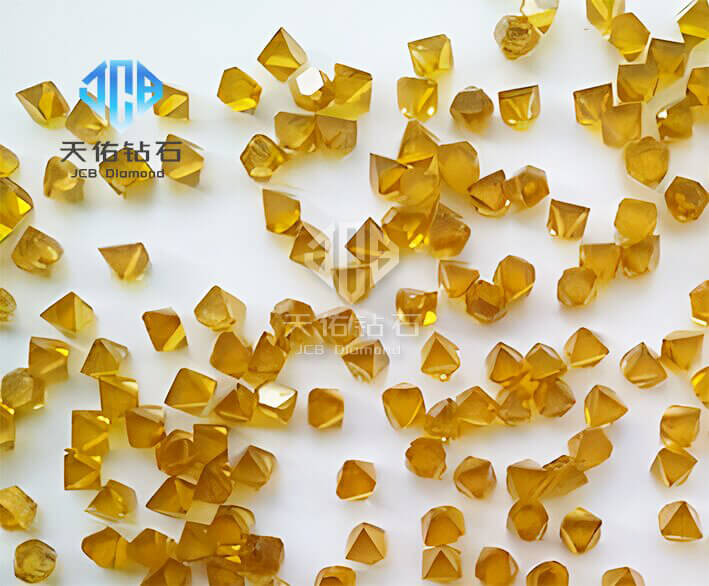
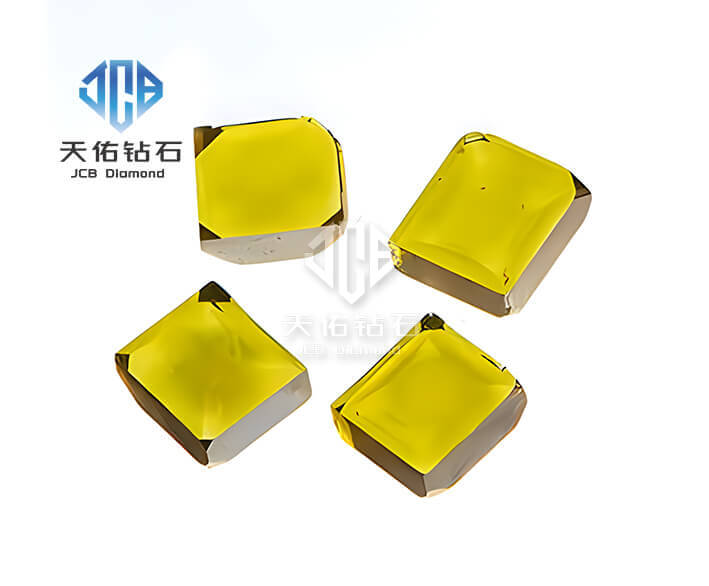
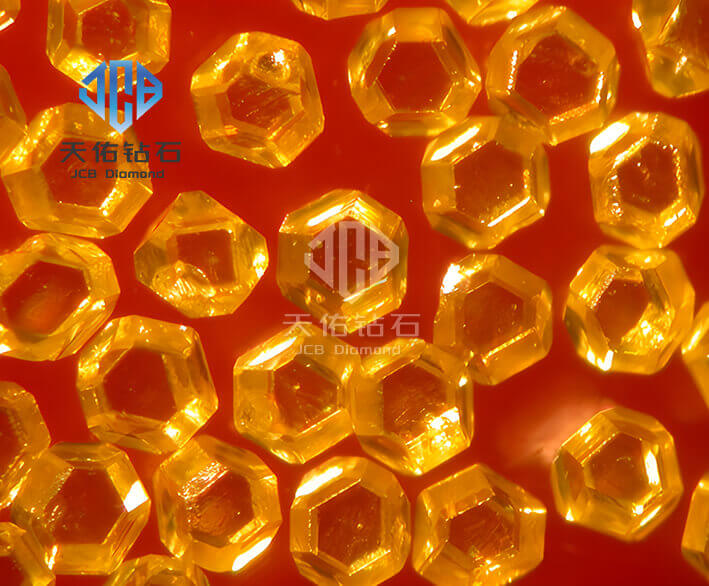
As the number of components and overall power consumption aboard spacecraft continue to increase, existing thermal-management technologies need to be enhanced or supplemented with more efficient heat-transfer solutions. Diamond heat spreaders offer a new way to address this challenge. They can replace copper- and aluminum-based thermal-management products to meet the heat-dissipation demands of highly integrated payload components operating at high heat fluxes.
Aluminum and copper are traditional high-performance thermal-conductivity materials. Thanks to their mature processing methods, low cost, and good workability, they are widely used in aerospace and civil industries. With advances in materials-processing technology, ultra-high-performance thermal-conductivity materials—such as carbon-fiber materials and diamond heat spreaders—have developed rapidly and begun to see practical use. These materials feature a low coefficient of thermal expansion (CTE), exceptionally high thermal conductivity, and low density, making them preferred alternatives to aluminum and copper.

1. CVD Diamond Heat Spreaders
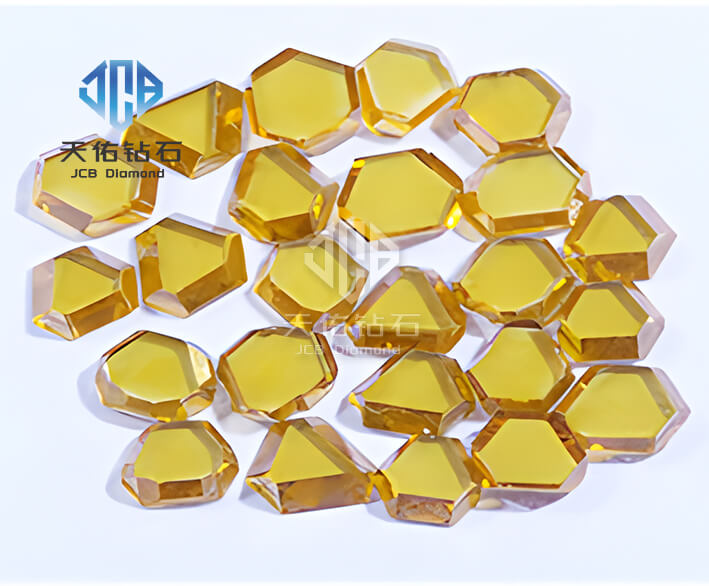
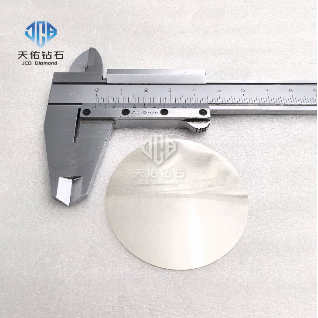
Henan Tianyou Superhard Materials Co., Ltd. can currently manufacture diamond wafers measuring 2–4 inches in diameter, with a thermal conductivity of 1,000–2,000 W/(m·K) and a thickness of 0.2–1 mm. The company can also provide metallization, patterning, and drilling. These heat spreaders are intended for aerospace thermal management and enable efficient heat dissipation.
2. Diamond Composites
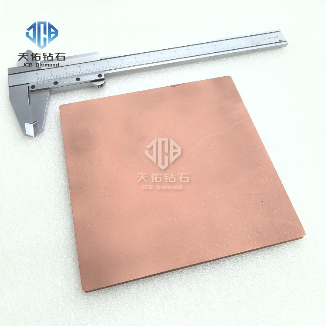
Composites made from diamond powder and metals are another promising direction in the development of ultra-high-performance thermal-conductivity materials. This is a key research focus for Henan Tianyou Superhard Materials Co., Ltd., which has made significant progress in this area. The density and thermal conductivity of these materials can be tailored, and they are suitable for machining and welding.
Diamond–silver composite: thermal conductivity of 400–600 W/(m·K); density of 5.8 × 10³ kg/m³.
Diamond–copper composite: thermal conductivity of 600–1,200 W/(m·K); density of 5.9 × 10³ kg/m³.
Diamond–aluminum composite: thermal conductivity of 550–600 W/(m·K); density of 3.1 × 10³ kg/m³.
With the continued advancement of diamond materials science and technology, future spacecraft will be able to use more advanced and efficient heat-dissipation solutions. These can help extend equipment service life, reduce failure rates, and enable higher-performance electronic systems. Progress in these technologies may also have a significant impact on terrestrial applications, particularly in high-power electronic equipment and industries with demanding thermal-management requirements. Through continued innovation and optimization, diamond and diamond-based composites are expected to play an increasingly important role in spacecraft thermal-management technology and help drive technological advances across the industry.
Henan Tianyou Superhard Materials Co., Ltd. uses the MPCVD method to produce large, high-quality diamond materials. Its established products include diamond heat spreaders, diamond wafers, diamond windows, and diamond heterogeneous-integration composite substrates. The thermal conductivity of its diamond heat spreaders is stated as 1000–2200 W/(m·K). Its wafer-grade diamond surfaces have a roughness of Ra < 1 nm. These products are currently used in aerospace, high-power semiconductor lasers, optical communications, chip cooling, nuclear fusion, and other fields.