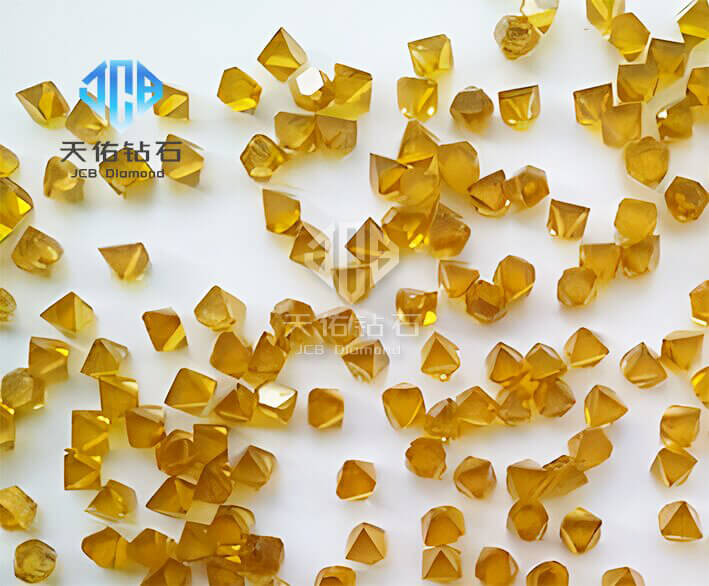
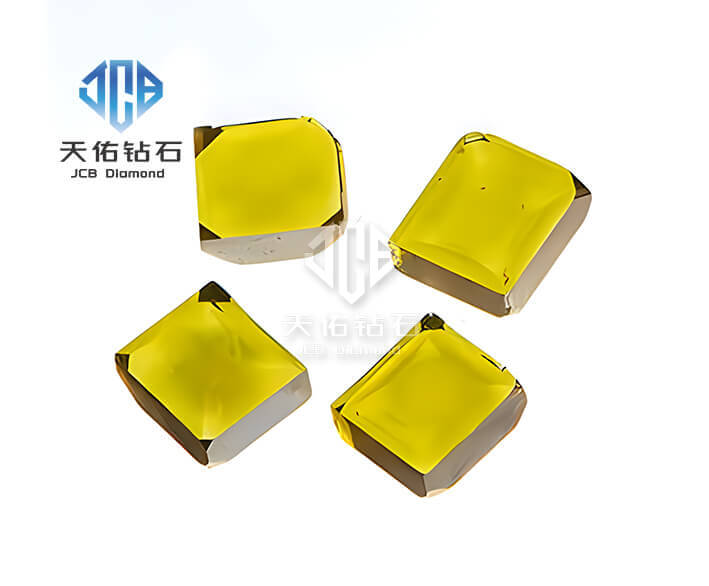
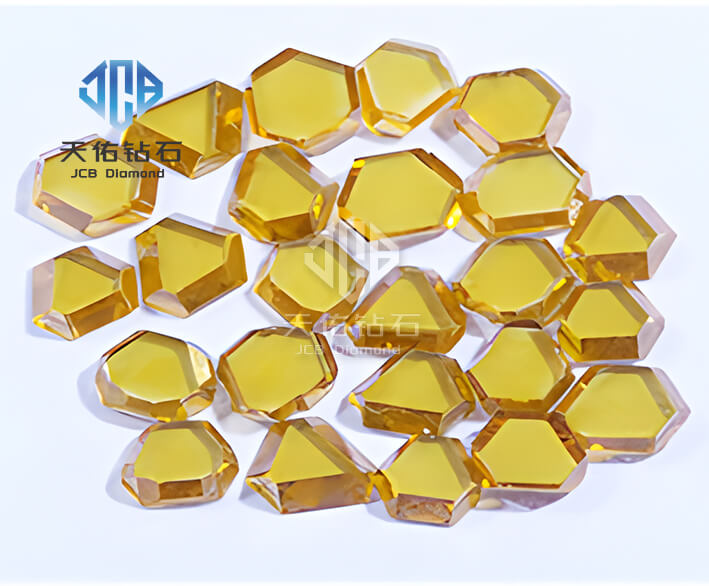
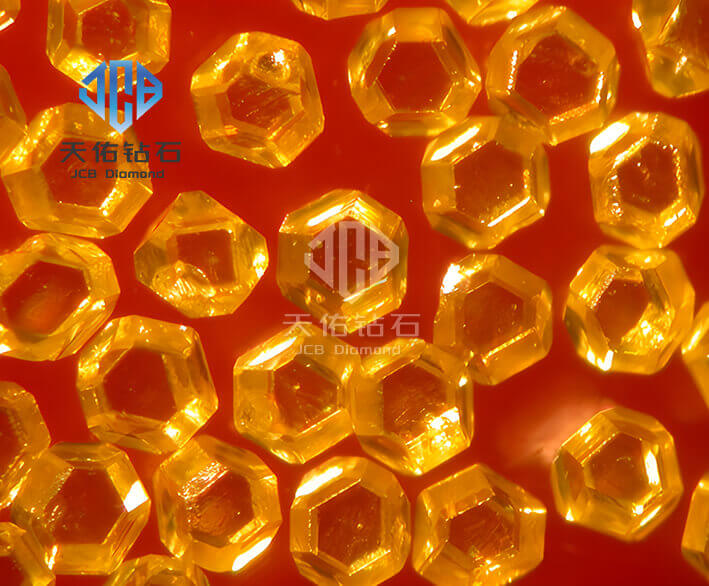
Coarse-grained single-crystal diamond plays a dual role in the field of grinding: it is both the workpiece (as in the case of semiconductor substrates and optical windows, which must be ground to atomic-level precision as end products) and the tool used to process other materials (as grinding wheel dressers, cutting tools and abrasives for grinding other hard and brittle materials). These two dimensions together constitute the complete picture of the applications of large-grain single-crystal diamond in the field of grinding.
I. As Grinding Wheel Dressing Tools: The ‘Benchmark’ for Grinding Precision
Grinding wheels gradually become dull and clogged during the grinding process and must be dressed regularly to restore their geometric accuracy and cutting ability. Single-crystal diamond dressers are the most widely used dressing tools in precision grinding.
Large-grain single-crystal diamond dressing pens typically utilise high-purity CVD single-crystal diamond as raw material; the diamond width can reach 3 mm, and the tip can be ground into a conical, square-pyramid or shaped dressing tool with angles ranging from 30° to 120°, used for the precision dressing of various curved surfaces, inclined surfaces, end faces and grooves on grinding wheels of CNC grinding machines. Taking the axe-shaped profiling dresser as an example, it utilises a single-crystal diamond cutting head with a 60° angle and an R0.2 radius; following dressing, the surface roughness of the machined workpiece can be controlled to within Ra 0.2. This type of dresser is suitable for CNC profile grinding machines and precision surface grinding machines from brands such as Daguang Changrong and Okamoto, and is primarily used for dressing ceramic-bonded and resin-bonded grinding wheels.
In the field of ultra-precision profile grinding, diamond dressing rollers also utilise single-crystal diamond grains as their core functional material. The dressing accuracy and service life of these rollers directly impact the machining quality of components and mass production efficiency; high-end applications include sub-micron profile grinding for medical devices and precision fuel injectors and pumps.
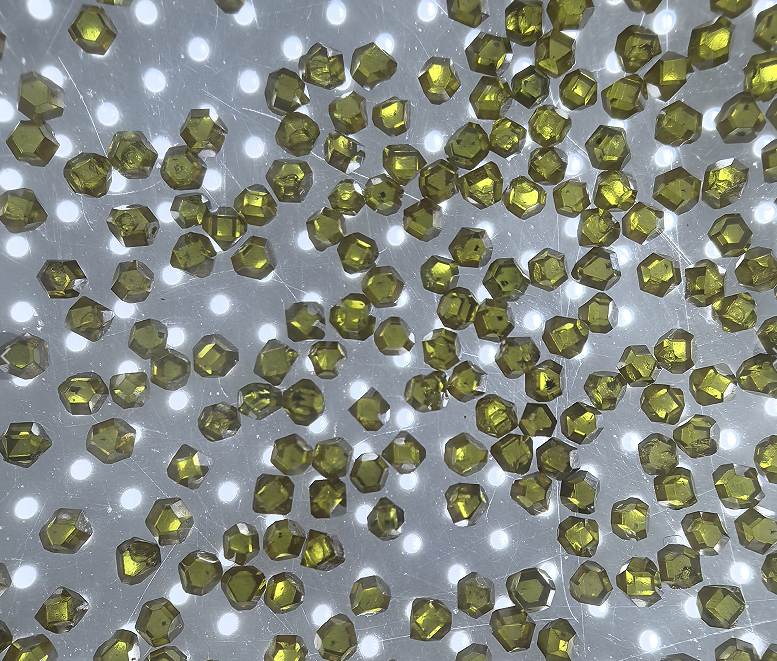
II. As an Abrasive: The ‘Teeth’ for Grinding Hard and Brittle Materials
Thanks to their intact crystal structure, sharp edges, high hardness and excellent wear resistance, single-crystal diamond micropowders are the core consumables for grinding hard and brittle materials.
In the processing of semiconductor and optoelectronic materials, single-crystal diamond micropowder is primarily used for the rough grinding and thinning of silicon carbide and sapphire substrates, the precision grinding of optical glass and quartz materials, and the levelling of cemented carbide and ceramic substrates. These materials generally exhibit high hardness and high brittleness, which ordinary abrasives struggle to handle; however, the sharp cutting edges of single-crystal diamond abrasives can control surface damage whilst ensuring efficient material removal.
In practical grinding processes, the selection of diamond abrasive grain size must be matched to the workpiece material and the processing stage. For example, when grinding monocrystalline silicon, resin-bonded diamond grinding wheels may be used, with grain size designation M6/12 for rough grinding and M2/4 for fine grinding; the combination of different grain sizes enables stepwise control from material removal to surface finish. Brazed diamond grinding wheels, on the other hand, excel in the efficient grinding of difficult-to-machine materials due to their advantages of high grain exposure height, high bond strength and high grinding ratio.
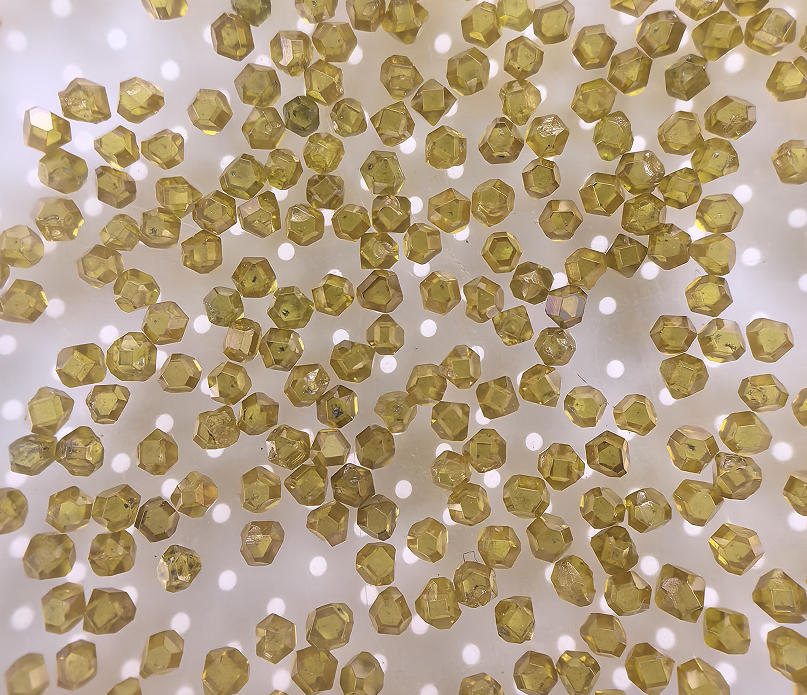
III. As a Cutting Tool Material: The ‘Cutting Edge’ of Ultra-Precision Machining
The cutting edge of a single-crystal diamond cutting tool can be ground to the atomic spacing level, with an edge radius of approximately 3 to 5 Å (0.3–0.5 nm)—a precision limit unattainable by other cutting tool materials.
The manufacture of such cutting tools is, in itself, a precision grinding process. The manufacturing process for single-crystal diamond turning tools includes material selection, orientation, sawing, roughing, clamping, rough grinding, fine grinding and inspection, with the grinding stage directly determining the final quality of the tool. High-precision single-crystal diamond turning tools are used for ultra-precision machining of complex surfaces in optical functional materials. As demand for optical aspheric and free-form elements continues to grow in the defence and optoelectronics sectors, the demand for high-precision diamond turning tools is increasing in tandem.
In practical applications, single-crystal diamond cutting tools are widely used in the ultra-precision machining of optical components such as injection moulds for resin lenses (e.g. optical disc pick-up lenses and smartphone camera lenses), moulds for LCD panel optical prisms, and laser mirrors. The machining of precision moulds for optical films and optical components used in flat-panel displays (FPDs) also relies on single-crystal diamond micro-cutting tools, which are capable of forming groove patterns with micron-level precision on workpieces.