Spherical diamond is not a new carbon allotrope. Rather, it is a class of engineered materials in which the crystal morphology of diamond is artificially controlled and shaped from angular, fragmented particles into spherical or quasi-spherical forms. This morphology-level change unlocks several functional dimensions of diamond’s intrinsic properties that were previously masked by geometric irregularity: rolling contact replaces chiseling contact, close packing replaces random overlap, and isotropic spherical contours also provide predictable interfacial behavior for drug delivery and field emission. In recent years, with the gradual maturation of routes such as CVD template growth, mechanical grinding passivation, and direct high-pressure high-temperature synthesis, spherical diamond is evolving from an “improved abrasive” in the superhard materials field into a cross-domain functional material spanning precision manufacturing, thermal management, biomedicine, and extreme-condition science.
Preparation Routes: The Physical Logic Behind Morphology Control
The preparation strategies for spherical diamond can be grouped into two paths: “top-down” morphological passivation and “bottom-up” spherical growth. The morphological passivation route uses diamond micropowder as the raw material and relies on the sliding friction provided by horizontal sand mills or disc mills to gradually blunt the edges and corners of particles through mutual collision and friction, achieving sphericity control by adjusting pressure, speed, and time. This method avoids the over-crushing caused by conventional crushing processes; the products have high packing density and good thermal conductivity and are suitable for scaled production. The bottom-up route is centered on CVD technology, depositing a diamond shell on the surface of monodisperse silica spheres and then using a sacrificial template to obtain hollow or solid spherical diamond particles, thereby overcoming the dependence of conventional CVD growth on planar substrates. High-pressure high-temperature and shock-wave methods can directly synthesize nanoscale spherical diamond microspheres; these products are structurally isotropic and provide irreplaceable precursor bodies for subsequent ultrahigh-pressure applications. Each of the three routes involves a trade-off among sphericity, cost, and yield, determining their applicable boundaries in different application scenarios.
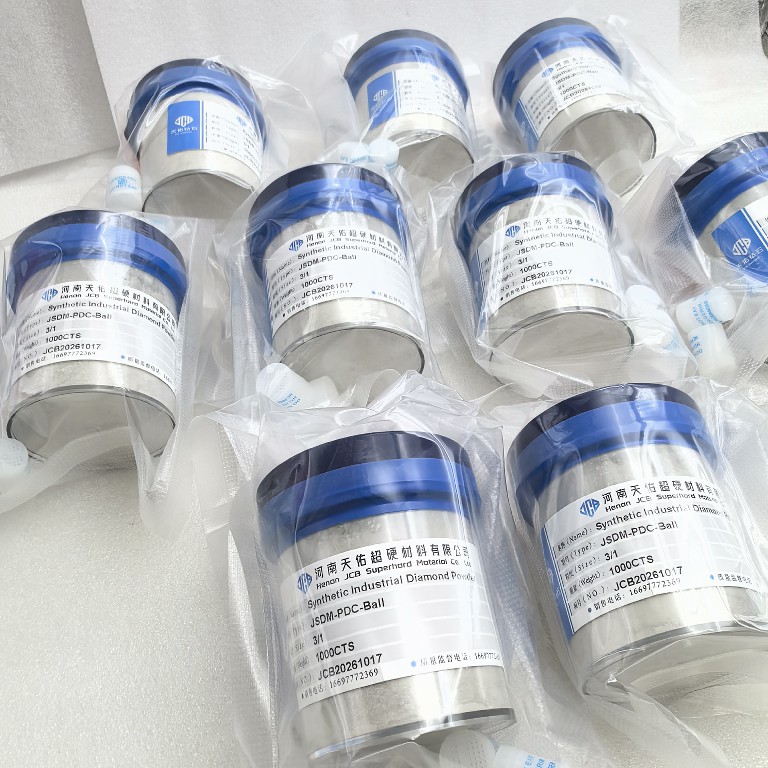
Precision Machining: Replacing Chiseling Contact with Rolling Contact
The most mature application of spherical diamond, and the one with the largest market volume, remains ultra-precision grinding and polishing. Conventional angular diamond micropowders remove material by “chiseling” when machining hard and brittle materials. Although the cutting force is strong, they readily leave deep scratches on the workpiece surface, restricting further reductions in surface roughness. Spherical micropowders, by contrast, shift the contact mechanism to “rolling abrasion,” in which abrasive grains interact with the workpiece through rounded surfaces, producing shallow scratches and high surface finish; at the same time, the agglomerate structure gives them a certain self-sharpening ability, significantly improving processing consistency. In the semiconductor and LED fields, spherical diamond micropowders are used for substrate grinding, edge polishing, and chip polishing; in optics, sapphire, optical glass, laser crystals, and other scenarios with stringent surface quality requirements also benefit from their low-damage characteristics. In the machining of hard and brittle materials such as aluminum nitride, silicon nitride, and ceramics, spherical morphology can also effectively reduce the probability of chipping, which has direct yield implications for microelectronics packaging and the manufacture of precision structural components.
When spherical diamond is deposited as a film on the surface of WC-Co cemented carbide spherical tools, crystal plane orientation further regulates tribological performance. A hot-filament-CVD-prepared (110)-oriented textured microcrystalline diamond spherical film (110TDF), compared with a (111)-oriented film, under dry friction conditions shows a 28% reduction in average friction coefficient, an 80% increase in wear resistance, a 23% reduction in workpiece surface roughness, and only a 23.6% decrease in material removal rate. This set of data reveals a noteworthy strategy: the diamond film on the spherical substrate does not sacrifice processing efficiency for surface quality, but rather achieves a better balance between tribological performance and removal capability through crystal facet engineering.
Thermal Management: Suppression of Interfacial Thermal Resistance by Geometric Regularity
With a room-temperature thermal conductivity of about 2000 W·m⁻¹·K⁻¹, diamond has long occupied the top of the performance pyramid for thermal management materials. However, when diamond is embedded as a filler in a polymer or metal matrix, particle morphology becomes a key variable determining the effective thermal conductivity of the composite. Random overlap of irregular particles readily forms voids and interfacial defects; these thermal resistance bottlenecks make it difficult to fully realize diamond’s laboratory-level thermal conductivity in composites. The value of spherical diamond lies in the fact that the regular geometry enables more uniform dispersion of particles in the matrix, increases packing density, and correspondingly reduces interparticle voids and interfacial thermal resistance. The high-sphericity diamond prepared by grinding passivation in patented technologies is designed precisely to address the structural shortcomings of existing thermally conductive fillers—“low filling rate, easy agglomeration, and unstable thermal conductivity”—and the products are explicitly targeted at the heat dissipation field for high-end devices. It is worth noting that the advantage of spherical morphology in constructing thermally conductive paths is not absolute: at low filler contents, flake-like or rod-like diamond with a large aspect ratio is instead more likely to form a percolating thermally conductive network. Therefore, thermal management applications of spherical diamond are more suitable for medium-to-high filling systems and occasions with stringent requirements for interfacial uniformity; its competitive logic lies not in an “optimal single path” but in “predictable, scalable interfacial engineering.”
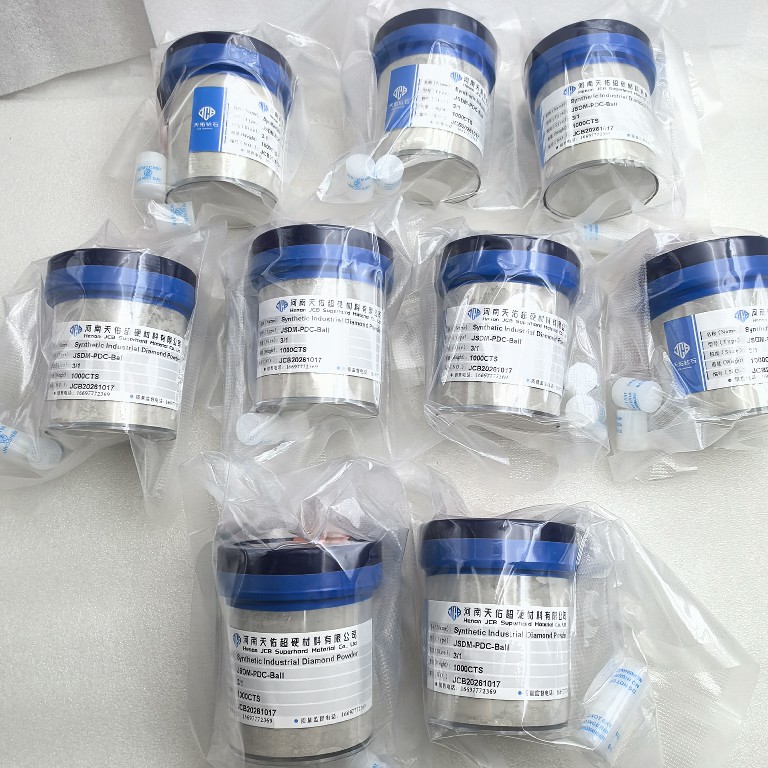
Lubrication and Friction Reduction: Engineering Realization of the Ball-Bearing Effect
In the field of lubricant additives, the “ball-bearing effect” of spherical diamond has been directly verified mechanically. Molecular dynamics simulations show that on an ideal contact surface, diamond nanoparticles prevent direct contact between friction pairs by rolling, reducing the friction coefficient by about 97%; on surfaces with protruding asperities, the particles suppress adhesive wear by fracturing asperities and redistributing interfacial atoms, with the friction coefficient reduction still approaching 70%. Macro-tribological experiments further show that after adding spherical diamond powder, the roughness of the Si₃N₄ surface improved by 124.62% compared with the system without addition, while GCr15 alloy under the same conditions also showed a change of 31.17%. The role played by spherical morphology here is twofold: it acts as a rolling body to reduce the sliding friction component and, through its regular surface, avoids plowing damage to the friction pair. This mechanism gives spherical diamond a technical positioning distinct from flake-like or irregular nanodiamond in scenarios such as precision machinery lubrication, engine oil additives, and metal forming lubrication.
Biomedicine: Interfacial Predictability Brought by Spherical Contours
The rise of nanodiamond in biomedicine is largely built on its low toxicity, good biocompatibility, and functionalizable surface. Spherical nanodiamond gains an additional interfacial advantage in this framework: the isotropic spherical contour makes surface modification density and ligand presentation more uniformly distributed on the particle surface, reducing the uneven steric hindrance of ligands caused by abrupt curvature changes at edges and corners. Molecular dynamics simulations show that the grafting density, chain length, and core material of PEGylated spherical nanodiamond are key parameters determining its dynamic behavior in physiological media, and that PEG coatings can effectively prevent aggregation between particles. At the application level, surface-functionalized nanodiamond has extended to targeted drug delivery, photothermal/photodynamic therapy, stimuli-responsive drug release, medical imaging, and the construction of theranostic platforms. Fluorescent nanodiamond containing nitrogen-vacancy centers can deliver anticancer drugs while enabling quantum-sensing-level imaging tracking, providing a material basis for real-time feedback during treatment. The performance of spherical agglomerated diamond microspheres in composite coatings for bone tissue engineering scaffolds also suggests that particle morphology has a regulatable effect on cell adhesion, spreading, and functional expression. Of course, translation from the laboratory to the clinic still faces constraints from insufficient long-term in vivo toxicological data and the lack of standardized biocompatibility evaluation systems; the morphological advantages of spherical diamond need to be further confirmed in systematic preclinical evaluations.
Optics, Field Emission, and Extreme Conditions: Extension of Spherical Geometry in Functional Devices
Diamond’s excellent transmittance in the 0.3–2.5 μm band and above 6 μm makes it an ideal candidate material for high-power laser output windows and infrared optical windows. Progress in the preparation of CVD diamond hemispherical shells and curved optical components indicates that spherical and curved geometries are extending diamond’s optical applications from planar windows to radomes and conformal optical elements, and hemispherical shells on the order of 70 mm in diameter have entered the development stage. In electron emission, quasi-spherical microcrystalline diamond polycrystals exhibit a turn-on field of only 0.55 V/μm, and at 2.18 V/μm the field emission current density can reach 11 mA/cm²; the local field enhancement effect brought by the curvature of the spherical surface plays a discernible role. More striking is the performance of nanocrystalline diamond microspheres in extreme-condition science: their yield strength reaches about 460 GPa under a confining pressure of about 70 GPa, and they are used as pressure-boosting elements in two-stage diamond anvil cells, successfully generating static pressures exceeding 1 TPa. This application transforms spherical diamond from “an object to be processed” into “a tool for creating extreme conditions,” and its isotropy, structural uniformity, and low atomic number are all indispensable in this role.