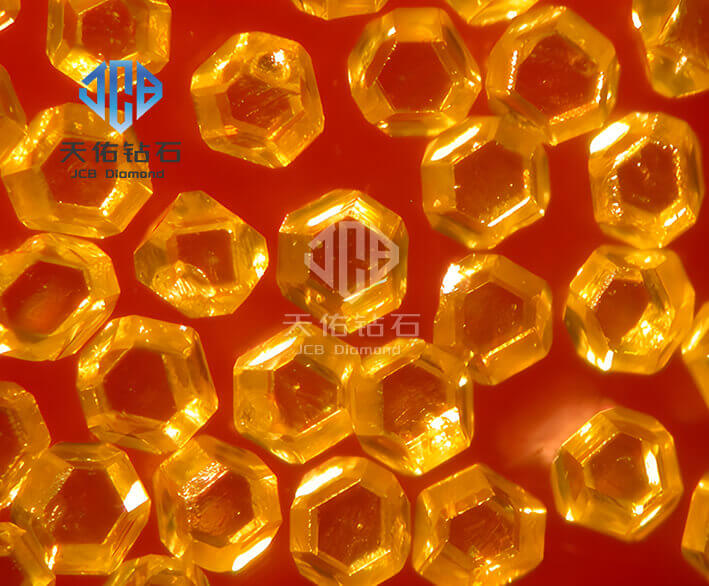
From abrasive to thermal-management material: a diamond grit is changing roles
As the power of a single AI compute chip approaches the kilowatt class, the first ceiling is not the silicon but the thermal interface material (TIM). Conventional fillers — alumina and aluminium nitride — are already close to their limits in filler loading and thermal conductivity, so the industry has turned to a material once used only for grinding: diamond, and specifically spherical diamond .
The intrinsic thermal conductivity of diamond at room temperature reaches 2000–2200 W/(m·K), roughly seventy times that of alumina (on the order of 30 W/(m·K)) and more than ten times that of aluminium nitride (about 180 W/(m·K)). Its electrical resistivity is above 10¹¹ Ω·cm, so it is electrically insulating, and its coefficient of thermal expansion matches silicon and silicon carbide closely. In other words, it conducts heat away without creating short-circuit risk or thermal cycling stress.
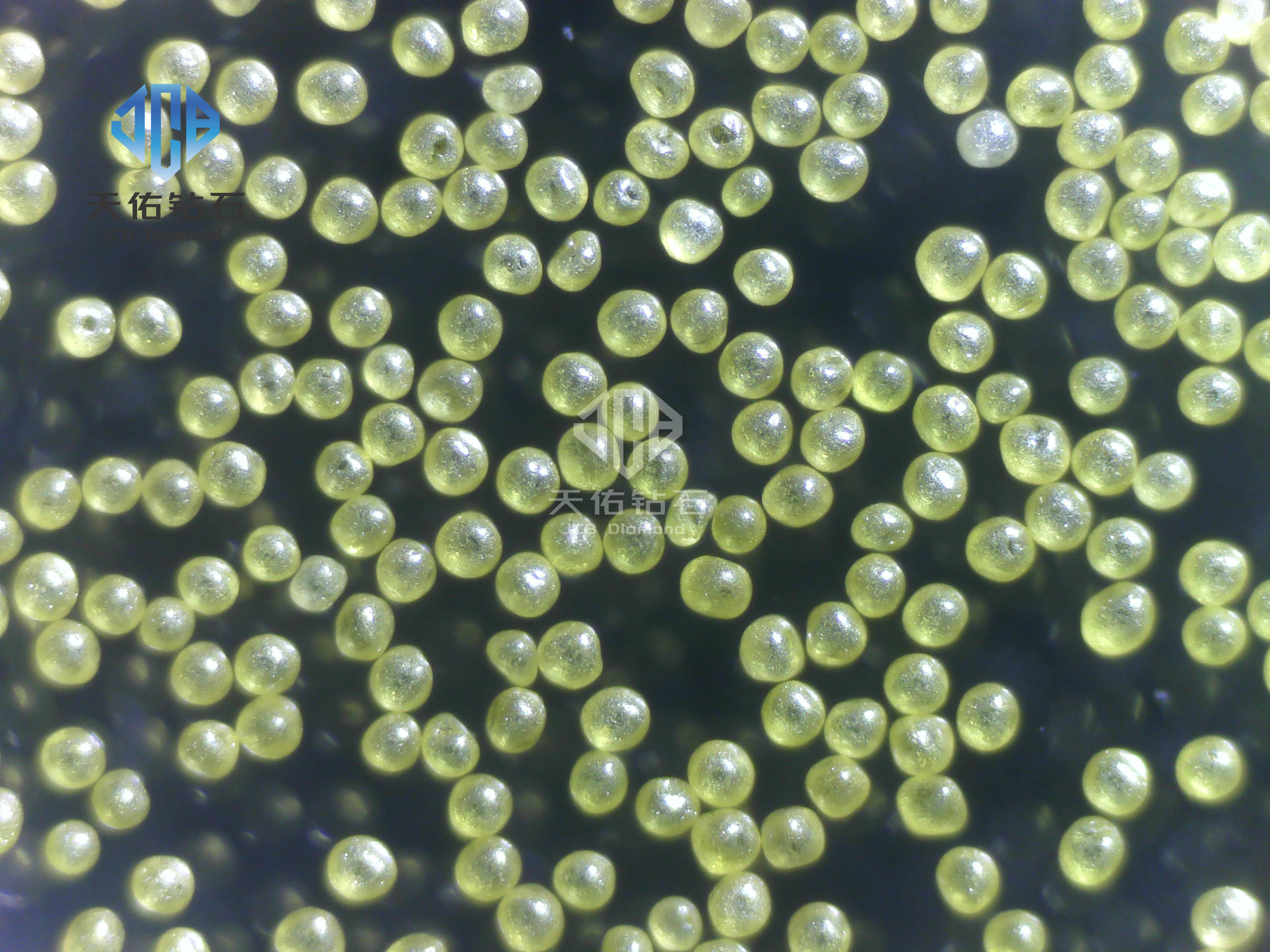
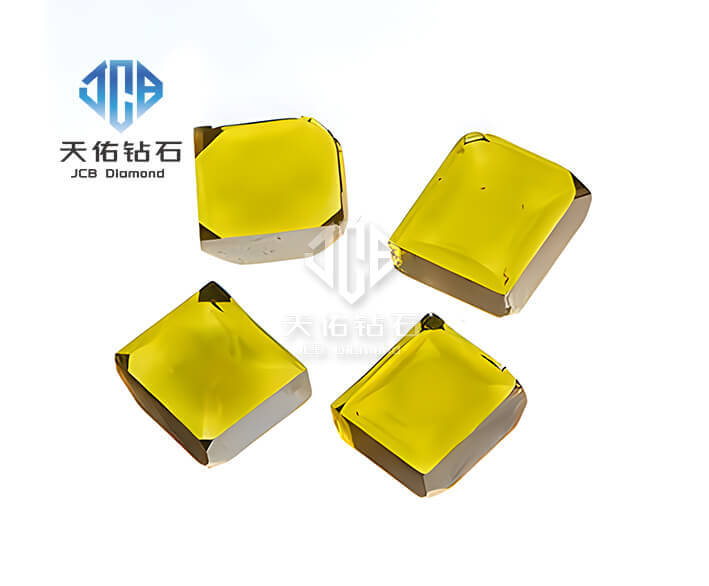
The problem lies in particle shape. Crushed or poorly rounded diamond particles have sharp edges and irregular morphology, so packing them into a polymer or metal matrix leaves many voids, and the interfacial thermal resistance — both between particles and at the particle–matrix boundary — is high. The composite actually produced often reaches only a small fraction of diamond's intrinsic value. In silicone thermal gels the figure usually sits in the 1–5 W/(m·K) range; even with surface-treated diamond in a sodium silicate matrix, laboratory data at 50% filler loading only reach about 10.32 W/(m·K).
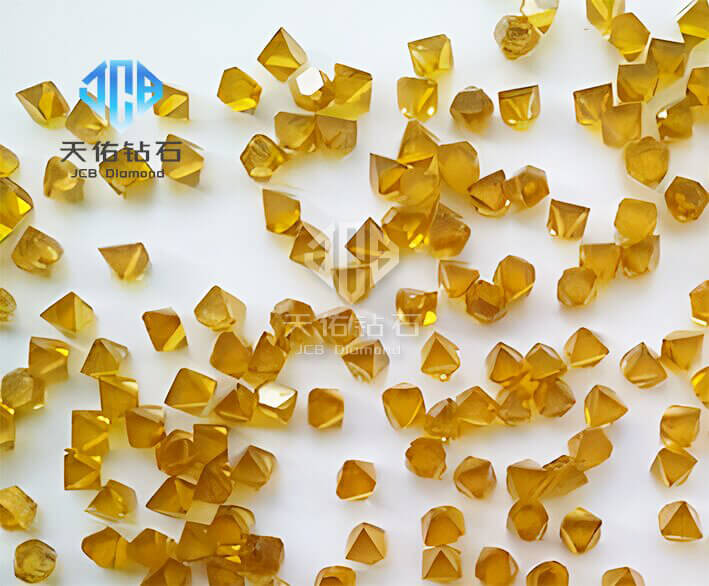
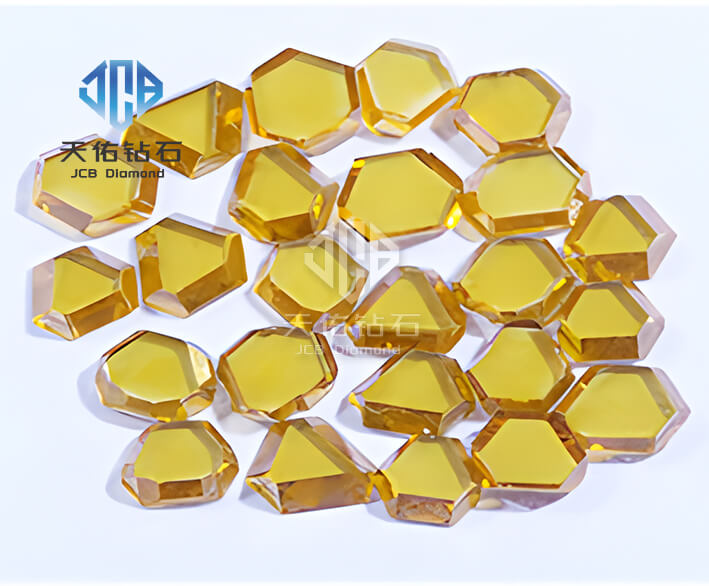
Spheroidisation changes the picture. A high-grade single-crystal diamond is rounded into spherical diamond— near-spherical in shape, with a narrow particle size distribution and low impurity content on the surface and inside. Packing density rises noticeably, particles disperse more evenly in the matrix, and inter-particle voids and interfacial resistance fall accordingly; the spherical surface also enlarges the contact area and bond strength with the matrix. There is a very practical point too: at the same filler loading the viscosity of the system is lower, and wear on mixing equipment, dispensing needles and moulds is reduced — a hard requirement for a production line. Chinese manufacturers now offer high-thermal-conductivity diamond grades of this spherical type from 20 to 600 µm, covering formulations from the micron to the sub-millimetre range.
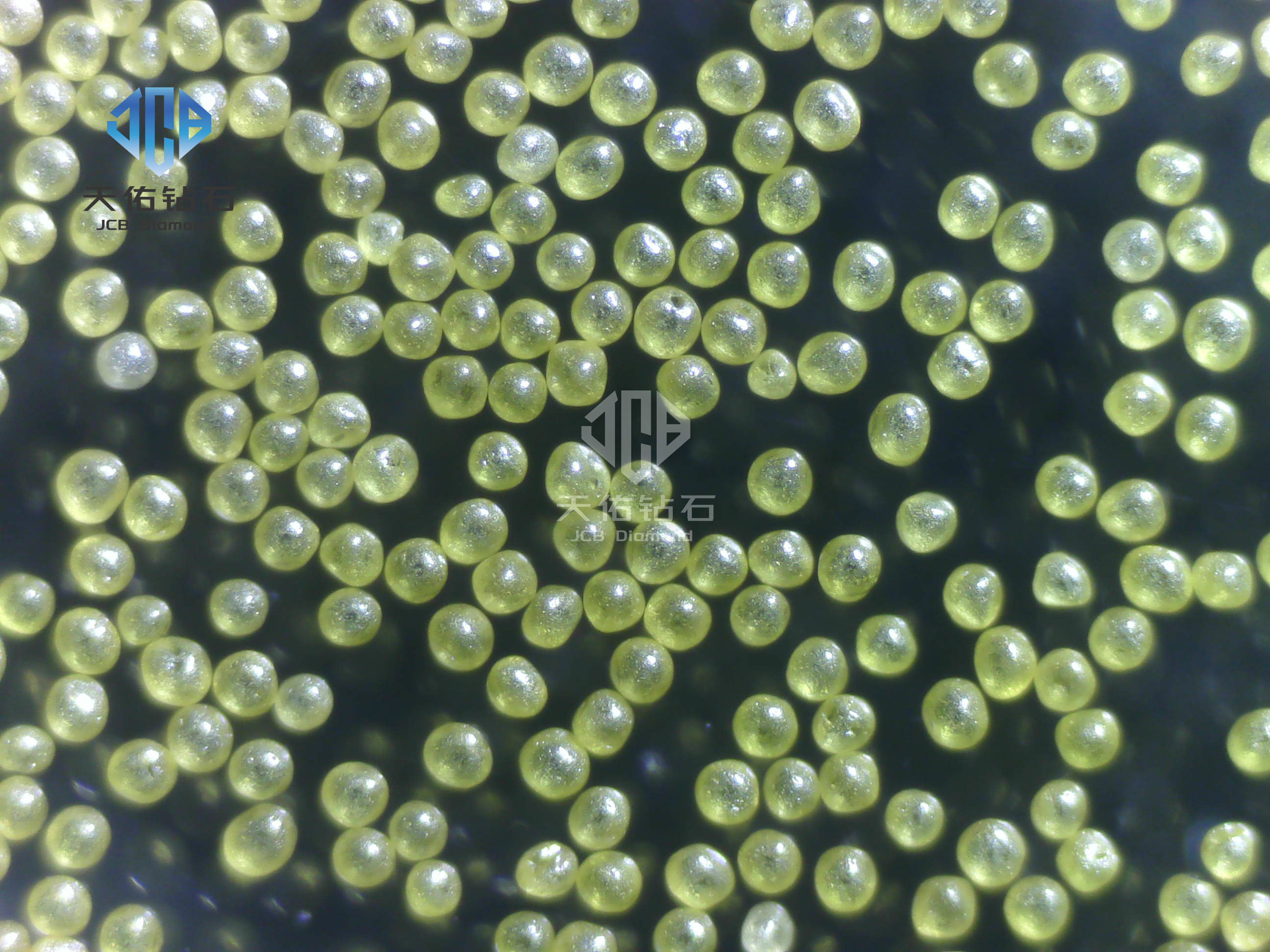
The applications are already fairly clear: first, heat sinks in diamond/copper and diamond/aluminium form for high-power lasers, RF devices and power modules; second, thermal grease, thermal gel and potting compound applied between CPU, GPU, IGBT and the heat sink; third, sintering pastes for power modules. In published research an diamond paste reached a thermal conductivity of 96.59 W/(m・K), about 43% above the undoped system, and in a silicon carbide packaging model the maximum junction temperature dropped by roughly 3.09 °C.
The technical rules for the metal-matrix route are also well understood: a low-resistance percolation network forms only at a volume fraction of 60–70%; above 70%, incomplete infiltration produces voids and cracks and thermal conductivity turns down. The industry therefore holds that the competitiveness of spherical diamond lies not only in the powder itself but in interface engineering — surface metallisation and carbide coatings.
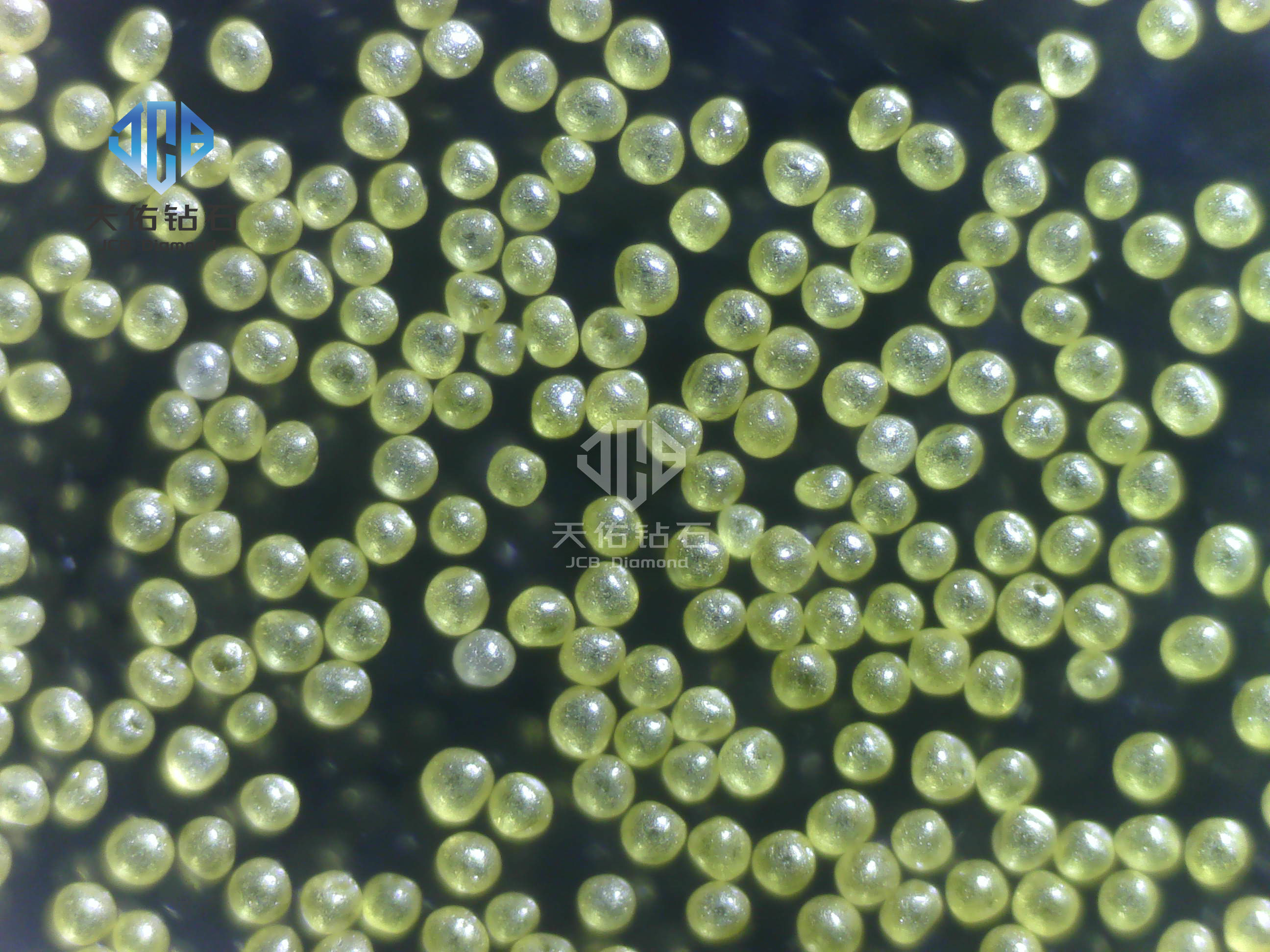
What remains unsolved is equally clear. High-grade single-crystal feedstock plus spheroidisation still costs more than a conventional abrasive product; the brittleness and processability that come with high filler loading need work on the formulation side; and most importantly the evaluation methodology is inconsistent — many “2000 W/(m·K)” claims on the market refer to the intrinsic value of diamond, not the actual thermal conductivity of the finished gel or diamond/copper heat sink, and the gap between the two is one to two orders of magnitude. For volumes to really scale, a unified test standard for “powder to composite” may matter more than another price cut.
From abrasive grade to thermal-management grade, the price band, the customer base and the technical language all change. Whether high-thermal-conductivity diamond in spherical form can catch this wave of AI cooling demand will be answered in the next two or three years.