AI Servers: A Key Growth Market
AI computing servers are currently one of the most important application markets for copper-diamond composite materials. NVIDIA's H100 GPU already has a TDP of 700W, while the next-generation Rubin Ultra is projected by industry estimates to exceed 2,500W in power consumption, with local chip heat flux densities surpassing 1,000 W/cm² and per-rack power typically exceeding 50 kW. Traditional air cooling has limited capacity, and conventional liquid cooling also faces challenges when dealing with ultra-high-power chips.
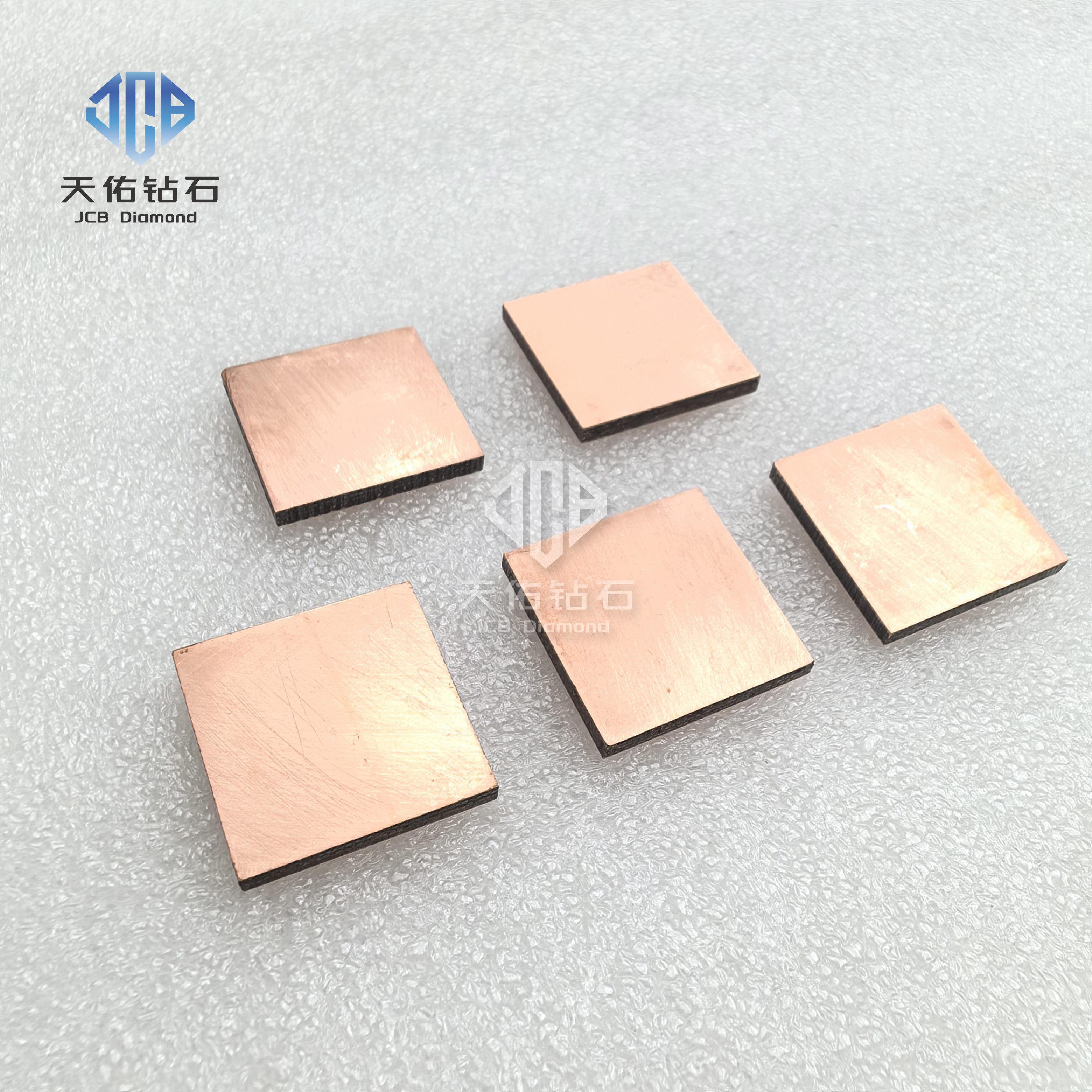
Copper-diamond thermal solutions offer a new option for AI servers. Tests show that using copper-diamond can improve chip module heat transfer capability by approximately 80%, effectively supporting higher compute performance. At the same time, data center energy efficiency is significantly optimized. Research indicates that with efficient thermal solutions, PUE (Power Usage Effectiveness) can be reduced to around 1.1, far better than the 1.5–2.0 typical of traditional air-cooled data centers. For a 10MW-class supercomputing center, this translates to millions of kilowatt-hours saved annually, along with a corresponding reduction in carbon emissions.
6G and Laser Semiconductors: A Promising Second Growth Curve
Optical communications and 6G base stations represent another major application direction. In 6G base stations, core components such as Massive MIMO antenna arrays and millimeter-wave power amplifiers have heat flux densities exceeding 300 W/cm², while requiring stable operation across a wide temperature range of –40°C to +85°C, along with high-frequency signal compatibility—conditions that traditional aluminum heat sinks can no longer satisfy.
Copper-diamond composites demonstrate unique advantages here. Their thermal conductivity is 3–5 times that of conventional aluminum silicon carbide, their coefficient of thermal expansion closely matches that of third-generation semiconductors like GaN and SiC, and their dielectric properties help reduce signal loss in the millimeter-wave band. Tests indicate that copper-diamond thermal solutions can effectively lower signal transmission losses and contribute to improved base station coverage quality.
In the high-power laser semiconductor field, laser diodes have local heat flux densities exceeding 500 W/cm² and are extremely sensitive to temperature fluctuations. Copper-diamond heat spreaders can significantly reduce junction temperature, greatly improve heat dissipation efficiency, enhance laser wavelength stability, and extend device lifetime.
Automotive and 3C Electronics: The Mass-Market Potential
Automotive and 3C electronics are important mass-market areas for copper-diamond materials. In the new energy vehicle sector, the proliferation of 800V platforms means SiC power modules now face local heat flux densities over 250 W/cm² and must operate reliably over wide temperature ranges. According to company test feedback, using copper-diamond heat spreaders can substantially shorten fast-charging times, significantly reduce thermal management risks, and improve module reliability.
In the 3C electronics space, chips in foldable smartphones and high-performance laptops already see heat flux densities exceeding 120 W/cm², while product designs continue to trend thinner and lighter. Lenovo's Yoga Slim 7i Aura Edition has become the world's first consumer electronics product to mass-implement copper-diamond cooling, achieving a ~30% reduction in module weight and a thickness of just 12 mm, while stably delivering 40W of performance and maintaining low noise levels even at full load.
Of course, copper-diamond still faces cost challenges in the mass market. Its material cost is currently several times that of traditional copper-based materials, limiting it to high-end vehicle models and flagship 3C products. However, as production scales up and technology matures, costs are expected to decline significantly in the coming years, potentially enabling broader penetration in automotive SiC modules and premium 3C devices.
Aerospace and Aviation: A Traditional Stronghold Continues to Deepen
Aerospace and aviation represent a traditional stronghold for copper-diamond composites. In the vacuum of space, heat dissipation relies solely on conduction and radiation, with efficiency less than one-thousandth of that on the ground. Satellites face surface temperatures reaching several hundred degrees Celsius under direct sunlight, while plunging to –200°C in shadow. Copper-diamond composites can operate stably across extreme temperature swings from –200°C to several hundred degrees Celsius, showing minimal performance degradation in thermal shock tests. Moreover, their density is nearly one-third lower than that of pure copper, directly contributing to lower space launch costs.