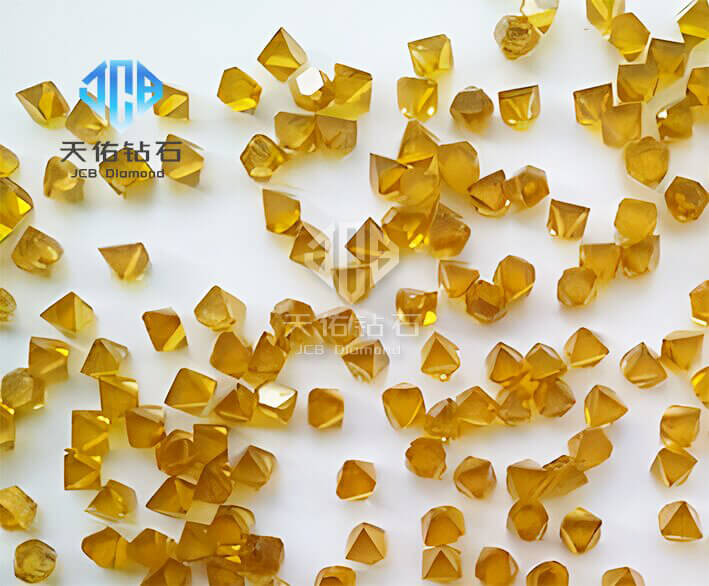
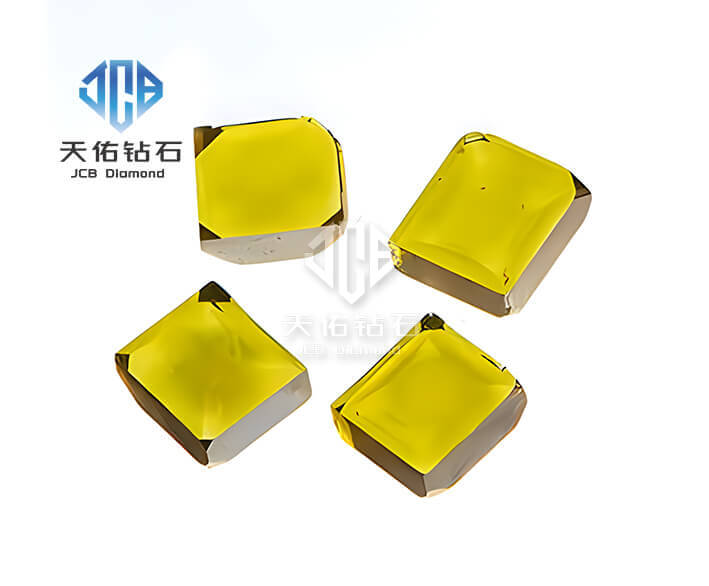
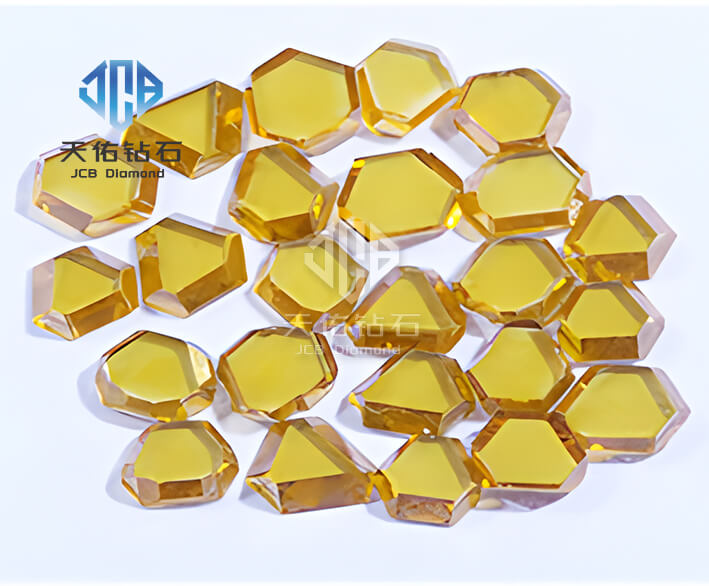
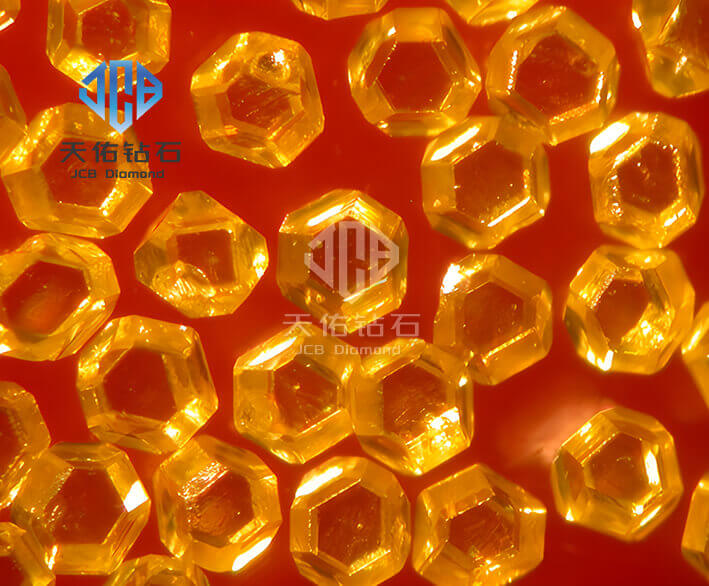
Diamond is regarded as an ideal thermal management material capable of meeting the demands of the rapidly developing electronics industry. On 6 December 1963, China successfully developed its first synthetic diamond; over the past sixty years, domestic production of synthetic diamonds has increased year on year.
Its applications are extremely wide-ranging, from domestic use to high-tech fields such as microelectronics and aerospace. Today, single-crystal diamond wafers have become the ultimate new technological component in artificial intelligence, cloud computing chips, power electronics for electric vehicles, and wireless communication chips.
Typical thermal management applications for diamond include: diamond-reinforced metal packaging materials (Diamond/Cu, Diamond/Al), heat sinks, and GaN devices on diamond substrates. Diamond-based heat sinks are used in laser cooling systems
to enable efficient heat transfer and dissipation, thereby reducing the operating temperature of the laser and improving its stability and service life.
As a packaging material for semiconductor devices, diamond possesses the high-quality properties essential for electronic packaging, such as high thermal conductivity, low dielectric constant, high electrical conductivity and high breakdown field strength. By depositing diamond films directly onto metal materials, composite materials or monocrystalline silicon substrates with high thermal conductivity, or by fabricating them directly into self-supporting diamond film wafers which are then bonded to the required electronic packages, CVD diamond films show great promise for applications in the field of packaging.
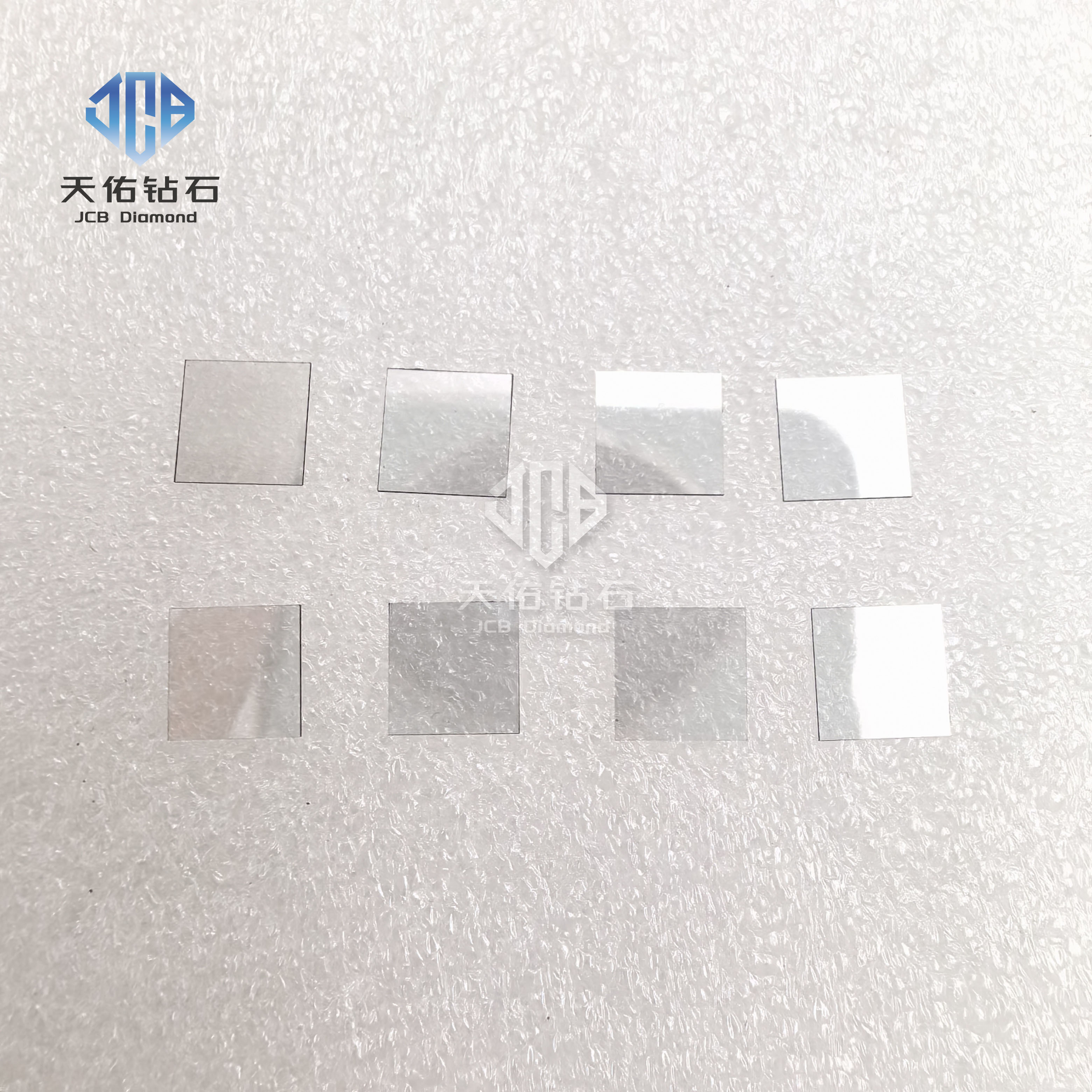
Diamond films offer numerous advantages as intermediate heat sinks for high-power semiconductor lasers, as outlined below:
(1) High thermal conductivity: In terms of heat dissipation, the thermal conductivity of the heat sink is the most critical factor. The waste heat generated by high-power chips during operation must be dissipated promptly; otherwise, it will cause wavelength redshift, affecting the device’s lifespan and stability. The thermal conductivity of synthetic diamond can reach up to 2,000 W/(m·K), which is approximately five times that of commonly used copper heat sinks. The superior thermal conductivity of diamond films significantly enhances heat dissipation.
2) Thermal expansion coefficient matching: The thermal expansion coefficient of the diamond film is variable, being 1 × 10⁻⁶ K at 300 K, 27 × 10⁻⁶ K at 500 K, and 4.4 × 10⁻⁶ K at 1,000 K. This matches that of GaAs material (4.5 × 10⁶ N), effectively eliminating thermal stress and minimising chip deformation.
(3) High electrical insulation: The resistivity of diamond films is extremely high, reaching 10³⁰·cm, resulting in superior insulation properties.
(4) Low dielectric constant: Compared with other heat sink materials (Si has a dielectric constant of 118, whilst AlN has a dielectric constant of 8.
(5) the dielectric constant of diamond films is as low as 5.5, which is beneficial for device operation and signal transmission.
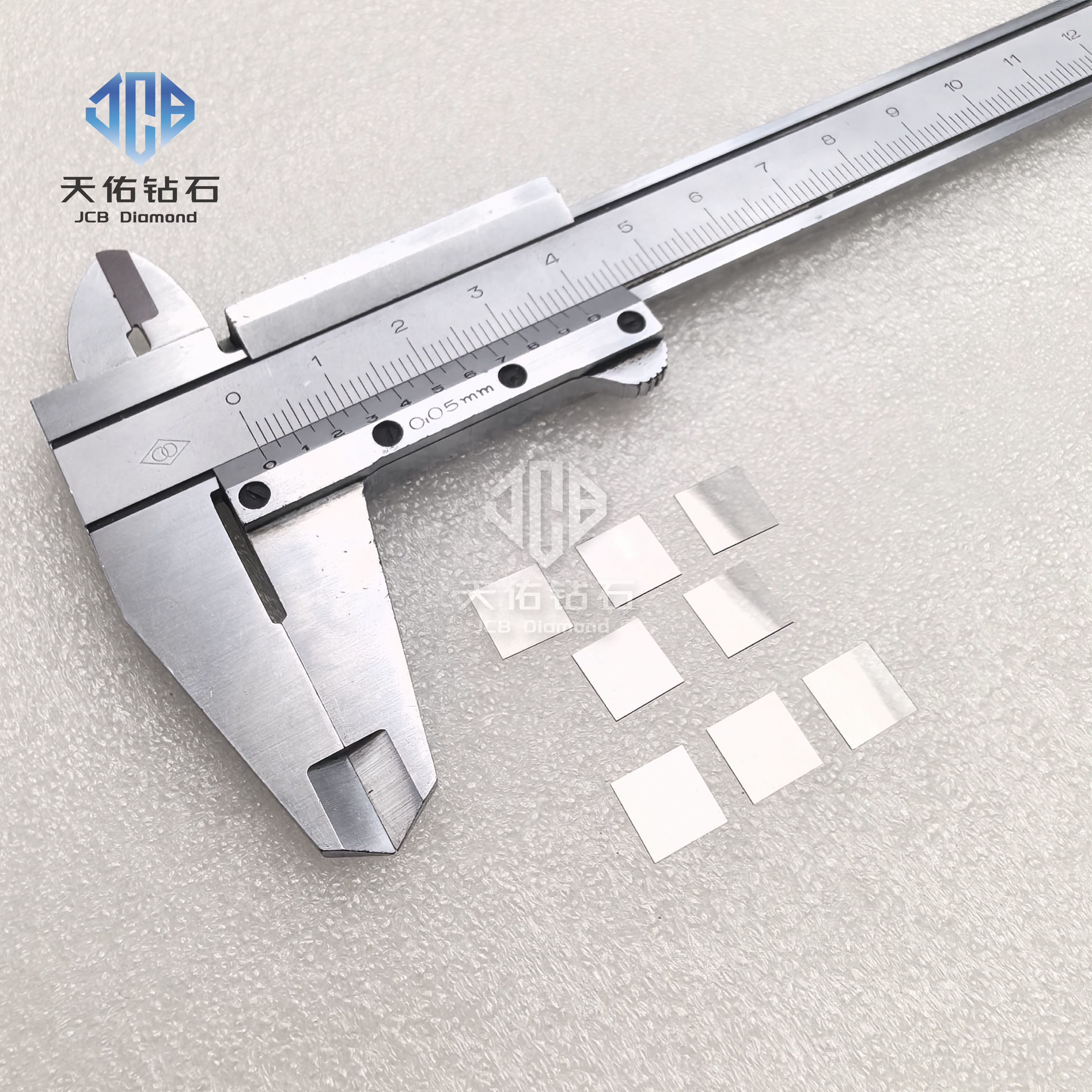
Diamond films offer numerous advantages as intermediate heat sinks for high-power semiconductor lasers, as outlined below:
The demand for miniaturised and lightweight electronic devices is driving changes in thermal management materials and solutions; lightweight, high thermal conductivity has become the development goal for heat dissipation materials, and diamond has emerged as one of the optimal choices. JCB DIAMOND is dedicated to the
research, production and sale of diamond materials, and currently offers a range of products including wafer-grade diamond, diamond heat sink plates, diamond-based heterogeneous integrated composite substrates and diamond-copper composites.